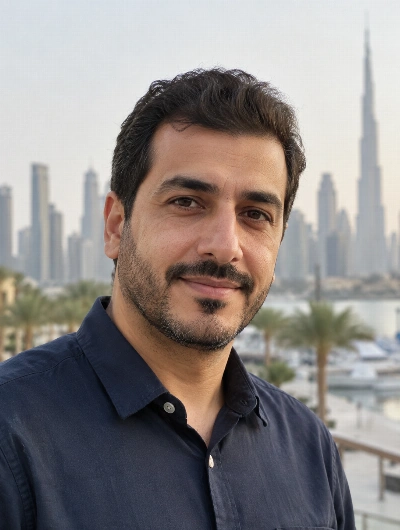
Omar Al Nuaimi Business, property and finance writer Dubai Times

Omar Al Nuaimi, Business, Property & Consumer Finance Writer at Dubai Times

Omar Al Nuaimi

26 articles

Writer

Business, property and finance writer

Omar.AlNuaimi@dubaitimes.nuovimondimedia.com

Omar Al Nuaimi is a Dubai-born business and finance writer covering the emirate’s economy, property market and consumer money. He focuses on what company announcements, market data, housing trends and financial decisions actually mean for residents, professionals, homebuyers and investors.

·

 
Omar Al Nuaimi is a Dubai-born business and financial writer whose work focuses on the forces shaping the emirate’s economy, property market and everyday financial decisions. Having grown up in Dubai, he has watched the city develop through successive periods of rapid construction, international investment, population growth and economic diversification. That experience gave him a lasting interest in the gap between how Dubai is described in corporate announcements and how economic change is actually experienced by residents, professionals, business owners, homebuyers and investors. His work is built around that distinction: separating the headline from the practical consequences.

Omar studied finance at the University of Dubai, where his academic background covered financial decision-making, corporate finance, investment analysis, markets, risk and the fundamentals of how businesses raise, allocate and manage capital. His finance education continues to shape the way he approaches economic reporting. Rather than treating a large transaction figure, percentage increase or market forecast as meaningful on its own, he looks at the assumptions behind the number, the period being compared, the source of the data and the people who are actually affected.

His early professional experience was in financial communications and business research, working with teams following companies operating across Dubai and the wider UAE. That work exposed him to corporate reporting, investment presentations, market research, expansion plans and the financial pressures facing businesses at different stages of growth. It also gave him a close view of the language companies use to present themselves to investors, customers and the media.

Over time, Omar became increasingly interested in turning that information into something more useful for ordinary readers. Instead of asking only what a company announced, he began focusing on what it was actually doing, how much money was involved, whether anything material had changed and what the development meant outside the organisation issuing the statement.

Business, Property and Consumer Finance

Omar later developed a stronger focus on Dubai’s property market through work connected with real-estate research and market analysis. His experience included following residential transactions, asking prices, rents, development activity, off-plan launches, housing supply and changing buyer behaviour across different parts of the city. That work reinforced his view that “Dubai property” should never be treated as a single uniform market.

The financial realities of an off-plan apartment, an established family villa, a first home, an investment property and a commercial unit can be very different even when all of them appear under the same broad market statistics. Because of that, Omar pays close attention to the mechanics behind property stories. Transaction volumes matter, but so do mortgage costs, service charges, payment plans, rental yields, financing conditions, future supply and the difference between an advertised price and the total cost of ownership.

When a developer announces a new project, Omar is less interested in promotional language than in practical questions. Where is the development located? Who is the likely buyer? How does its pricing compare with the surrounding market? What does the payment structure look like? When is completion expected? What additional costs or risks should a buyer understand before making a decision?

The same approach applies to broader market reports. When a report says that prices or rents are rising, he looks at the underlying data and asks whether the trend applies across Dubai or only to particular communities, property types or price segments. A strong headline number is not automatically useful if it hides major differences beneath the surface.

At Dubai Times, Omar covers Business and Economy, Property and Neighbourhoods, and Money and Consumer Finance, while also following related developments in employment, banking, investment and technology. His reporting includes company expansions, market entries, major commercial projects, financial services, mortgages, lending conditions, property transactions, rental trends, consumer costs and changes affecting entrepreneurs and investors.

He is especially interested in stories where several areas overlap. A change in residency rules can affect housing demand. New lending conditions can change the economics of buying a home. A company opening a regional headquarters can create jobs and demand for commercial property. A new technology platform can alter how residents borrow, invest, buy property or interact with financial institutions.

His approach to consumer finance follows the same principle. Omar does not assume that a financial product is attractive simply because it offers a low introductory rate, cashback, a payment holiday or another headline benefit. He looks at eligibility requirements, fees, repayment obligations, total cost, variable conditions and other terms that can materially affect the customer.

Whether he is writing about mortgages, borrowing, banking products or household costs, the aim is to help readers understand what they are actually agreeing to. He treats financial products as decisions with trade-offs, not as offers to be promoted.

For property buyers and investors, Omar avoids presenting market movements as instructions to buy or sell. Dubai attracts people with different budgets, objectives, time horizons and levels of risk tolerance, and the same development can make sense for one buyer while being unsuitable for another. His role is therefore not to declare something a “good investment”, but to provide enough information for readers to evaluate it themselves.

Editorial Approach and Reader Focus

Dubai’s position as a major regional business centre means that many stories first appear through company announcements, market reports and public-relations material. Omar treats those sources as starting points rather than finished stories. He looks for the original source, checks figures where possible, compares claims with available market data and distinguishes confirmed developments from projections, targets and marketing language.

He is particularly careful with words such as “record”, “largest”, “fastest-growing”, “premium” and “first”. These descriptions can depend heavily on definitions chosen by the organisation making the claim. Omar prefers to understand exactly what is being measured before repeating such language.

He takes the same cautious approach to forecasts. Predictions about property prices, economic growth, company performance or future demand can be useful, but they are not the same as observed facts. Omar looks at who produced the forecast, what evidence supports it and what assumptions would need to remain true for the prediction to hold.

When estimates from different organisations disagree, he prefers to explain the disagreement rather than present one figure as certain. Uncertainty is not treated as a weakness in a story; when it is material, it is part of the information readers need.

Omar follows both Arabic- and English-language sources when researching developments in Dubai. Arabic-language government announcements, regulatory updates and local business reporting can contain details that do not immediately reach an international English-speaking audience. His goal is not simply to translate those reports, but to identify the original information, verify the context and explain it in clear English.

Official information is central to that process. Depending on the subject, Omar prioritises primary material from Dubai government entities, regulators and financial authorities before turning to secondary reporting for context and independent interpretation. In property coverage, that means paying close attention to official transaction and regulatory information rather than relying entirely on brokerage commentary. In business coverage, it means distinguishing a company’s own statement from independently verifiable information about the wider market.

His editorial style is deliberately practical. If Dubai records a major increase in property transactions, he wants readers to understand whether that reflects higher prices, more transactions, new supply, investor activity or several factors at once. If a bank changes mortgage terms, the useful question is how the change affects the real cost and accessibility of borrowing. If a company chooses Dubai for a regional headquarters, he looks at what it intends to build, hire or invest in and whether the move has wider significance for the city.

Omar also avoids unnecessary financial jargon. Technical terms are useful when they explain something important, but not when they make a straightforward story harder to understand. He assumes readers are capable of making their own decisions when they are given clear facts, relevant context and a realistic account of uncertainty.

At Dubai Times, Omar’s reporting ultimately centres on a consistent set of questions: What changed? What is behind the announcement or number? Who is affected? What are the costs, risks or opportunities? What information is still missing? And what should a resident, buyer, professional, entrepreneur or investor understand before deciding what to do next?

For Omar, useful business and financial journalism should leave readers better equipped to make their own decisions, not more impressed by the organisation being covered. He believes accuracy, context and proportionality matter more than excitement, and that good reporting should be willing to say when the evidence is incomplete or when an announcement does not yet justify a strong conclusion. That philosophy defines his work at Dubai Times: follow the evidence, understand the numbers, identify the trade-offs and explain what they mean in practical terms for people participating in Dubai’s economy.

Topics

  • Economy of Dubai Dubai’s economic structure, business activity, trade, financial services, company growth and the factors influencing the emirate’s commercial environment.
  • Real estate Residential and commercial property, housing markets, ownership, development, investment, transactions and the financial considerations surrounding real-estate decisions.
  • Personal finance Everyday financial decisions involving income, spending, borrowing, mortgages, saving, investing and managing financial risk.

26 latest articles by Omar Al Nuaimi

Dubai Holding signs record construction deal for new headquarters and Jumeirah Residences

Dubai Holding has awarded its largest-ever construction contract, valued at AED 5 billion, for a new headquarters and the Jumeirah Residences Emirates Towers project. The move consolidates the group's operations and signals a new era for Dubai's premium office and residential markets.

Dubai green economy summit sets new benchmark for global sustainability

Dubai's World Green Economy Summit is redefining the region's role in the global energy transition, with $2.3 trillion in worldwide investments projected for 2025 and a focus on scaling up renewable capacity and economic resilience.

Dubai Comedy Festival adds five global stars for 2026 edition

Dubai Comedy Festival has confirmed five new international headliners for its 2026 programme, including Rafi Bastos, Katherine Ryan, Zarna Garg, Nima Naz and Abbas Bukhari. The expanded line-up will deliver over ten days of stand-up shows at leading venues across the city this October.
Dubai launches tokenised property shares for digital investors

Dubai is redefining property investment by offering tokenised shares in residential units, lowering the entry point to AED 1000 and targeting digital-native investors. The move aims to expand access, boost liquidity and reshape the city's real estate landscape.
Egyptian investors drive property and finance demand in Dubai

Egyptian investors are now among the top buyers in Dubai's property market, drawn by tax-free income, stable currency, and clear ownership rules. This shift is reshaping demand in key neighbourhoods and expanding financial activity across the city.
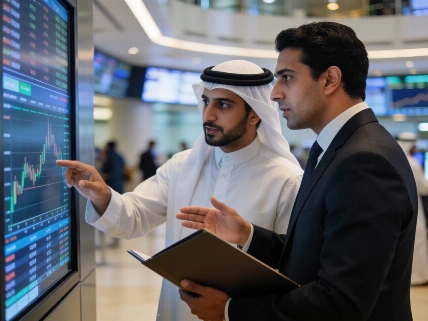
Dubai Taxi Company and IFA Board Decisions Set to Reshape Market Leadership

Key boardroom decisions and dividend actions by Dubai Taxi Company, IFA, and major Abu Dhabi firms will directly impact shareholders and market direction in Dubai and Abu Dhabi this week, with board elections and cash distributions taking centre stage.
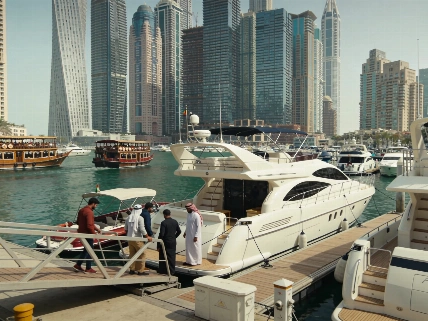
Dubai Maritime Sector Surges with Over Eight Thousand Registered Vessels

Dubai's maritime sector now counts 8,415 registered vessels and more than 14,000 marine companies, supported by advanced infrastructure and a diverse international user base. The city's marine ecosystem is driving economic growth and reinforcing Dubai's global status as a leading maritime hub.
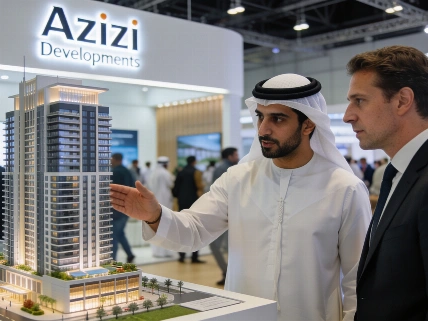
Azizi Developments unveils Sharjah project at International Property Show

Azizi Developments has chosen the International Property Show 2026 in Dubai to debut its first integrated community in Sharjah, Azizi Florence, while rolling out exclusive 4 percent discounts and a 20/80 payment plan for buyers across its UAE portfolio during the event.

Abu Dhabi launches blockchain verified digital skills card

Abu Dhabi Quality and Conformity Council has introduced the Gulf's first blockchain verified digital skills card, promising secure and transparent professional certification. The move sets a new benchmark for digital trust and workforce mobility in the region.
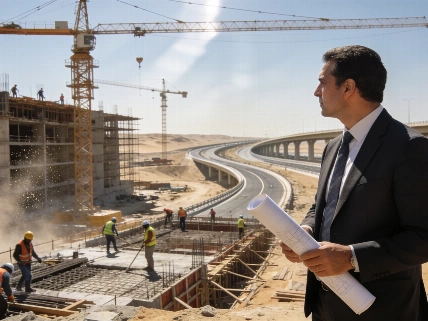
Real estate investment drives growth in construction and export services

Investment in the real estate sector is fuelling a surge in construction activity and boosting demand for electricity, iron, and furniture, according to Minister of Investment and Foreign Trade Dr. Mohamed Farid. The sector now accounts for 40% of total investment, with ripple effects across export services and infrastructure.
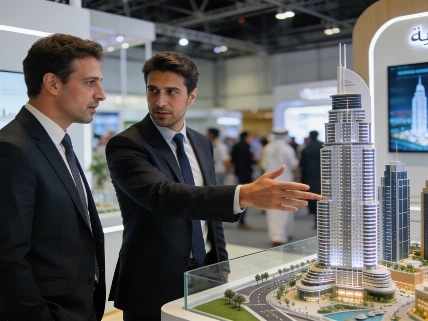
International Property Show opens in Dubai with global investor focus

Dubai launches the 22nd edition of the International Property Show at Dubai World Trade Centre, uniting more than 300 leading real estate players and global investors for direct access to active development portfolios and upcoming project opportunities.
Saudi authorities restrict property transactions to digital land registry

Saudi Arabia has mandated that all property transactions in Dammam, Khobar, Dhahran, Qatif and Hail must now be processed exclusively through the digital land registry, marking a decisive move to modernise real estate operations and data accuracy.
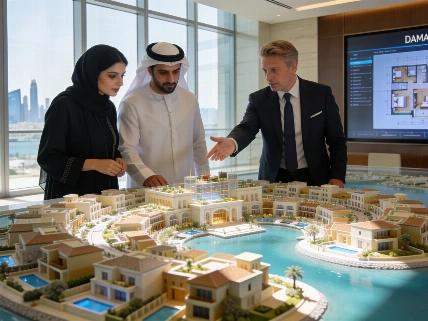
DAMAC Islands 2 drives Dubai off plan villa sales to new heights

DAMAC Islands 2 has captured 43 percent of all off plan villa sales value in Dubai so far this year, with buyers pouring over AED 10.7 billion into the project. Demand for larger family villas is reshaping the market as early stage purchases surge.

UAE launches new strategy to boost small business competitiveness

The UAE is developing a national entrepreneurship strategy with targeted initiatives to strengthen the competitiveness of small and medium enterprises. The plan includes new support mechanisms, government procurement, and collaboration across federal and local entities to drive sustainable growth.
Algerian Businessman Ayoub Aissiou Case Sparks Diplomatic Tensions with UAE

Allegations of UAE interference in the extradition of Algerian businessman Ayoub Aissiou have escalated diplomatic friction between Algeria and the UAE, raising questions about cross-border influence and the future of bilateral relations.
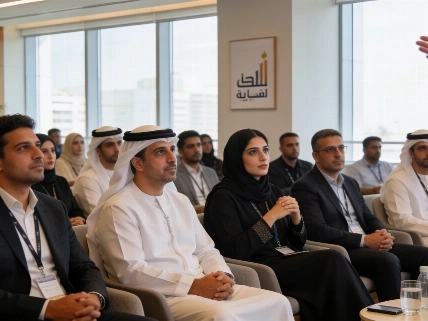
Dubai Social Media Summit sets new agenda for digital content creators

Dubai's Social Media Summit is redefining the future of digital platforms, spotlighting the urgent need for responsible content creation and practical innovation as leading voices gather to shape the next phase of the Arab world's digital landscape.
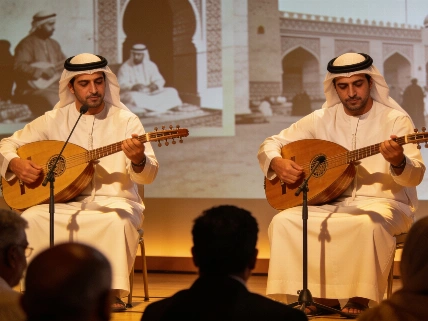
Abu Dhabi International Book Fair to honour Jaber Jasim legacy

Ahead of the 35th Abu Dhabi International Book Fair, the Abu Dhabi Arabic Language Centre will stage a multimedia tribute to late Emirati singer Jaber Jasim, blending live performances with archival visuals to reconnect new generations with the UAE's musical heritage.
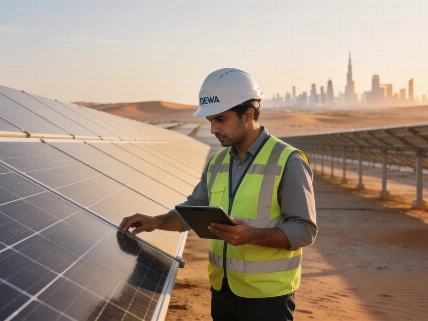
DEWA targets full clean energy production by 2050 in Dubai

Dubai Electricity and Water Authority has committed to delivering all of Dubai's power from clean sources by 2050, spotlighting its solar megaprojects and circular economy initiatives at the upcoming Dubai Environment Expo 2026. The move signals a decisive shift in the city's energy strategy.
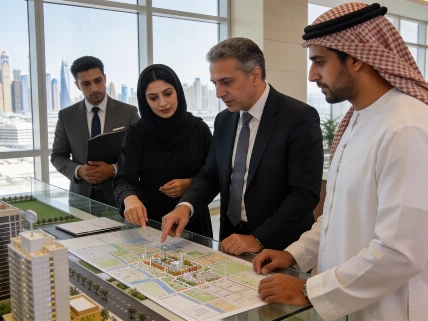
Foreign property ownership in Dubai faces new scrutiny over market impact

Dubai's property sector is under the spotlight as industry leaders urge clear rules for foreign ownership to protect market stability and national interests. Developers argue that attracting international buyers is vital for growth but warn that unchecked sales could distort prices and demographics.
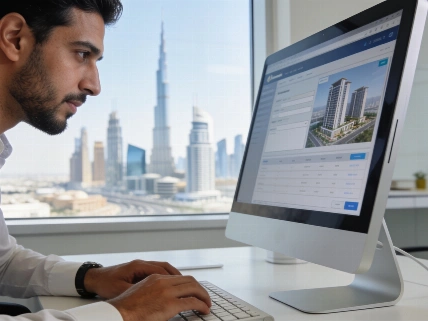
Dubai Land Department launches AI platform for property project registration

Dubai Land Department has unveiled a unified AI-powered digital platform allowing property developers to register projects and manage escrow accounts online, aiming to cut manual paperwork, speed up approvals and boost transparency in the emirate's real estate sector.
Unified property contract proposal aims to protect Dubai buyers

A proposal to introduce a unified property contract and establish a dedicated real estate authority could reshape Dubai's property market by balancing developer and buyer rights, improving project oversight, and boosting investor confidence.
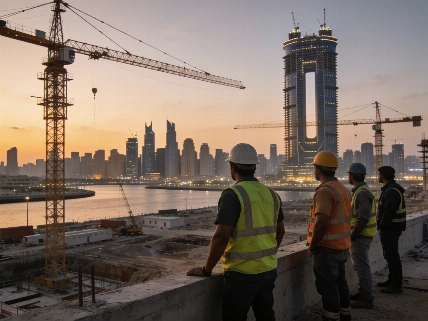
Dubai Property Market Faces Delayed Project Tender as Emaar Targets 2027 Balance

Emaar Properties has postponed the tender for Dubai Creek Tower, citing global port closures and cost controls, while forecasting that Dubai's property market will reach equilibrium by 2027 after years of rapid growth. Major new projects remain in the pipeline.

INBD REIT delivers strong profit growth as Dubai property values climb

INBD REIT posted a net income of AED 29.72 million for the first quarter ending June 2026, fuelled by rising property valuations, a 95 percent occupancy rate, and tighter cost management. The fund's net asset value and rental income both saw notable gains.

Dubai SME secures AED 1.78 billion contracts for local businesses

Dubai SME has locked in AED 1.78 billion in procurement contracts for small and medium enterprises, while launching the second round of 'طاولة الشيف الإماراتي' to accelerate the growth of Emirati founders in the food and beverage sector.
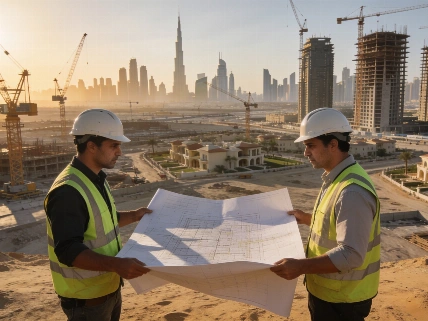
Emaar reveals plans for Dubai's largest ever urban development

Emaar Properties has announced a record-breaking AED 200 billion investment for a new master development in central Dubai, targeting accommodation for 150,000 people. The project will feature luxury homes, business hubs, retail, hotels, and extensive green spaces, marking the company's most ambitious undertaking to date.

Dubai villa prices surge as residential property market accelerates

Dubai's residential property market is set for another year of sharp price growth in 2025, with villa prices jumping nearly 15 percent and apartments up over 7 percent, according to new data from Dubai Data and Statistics Establishment. Commercial and hospitality sectors are also seeing robust gains.