
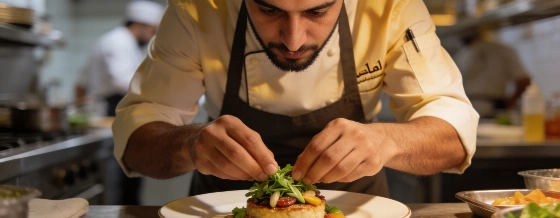
Dubai SME has locked in AED 1.78 billion in procurement contracts for small and medium enterprises, while launching the second round of 'طاولة الشيف الإماراتي' to accelerate the growth of Emirati founders in the food and beverage sector.
Dubai's ambitions for homegrown business just took a decisive leap. The Mohammed Bin Rashid Establishment for SME Development (Dubai SME) has confirmed AED 1.78 billion in procurement contracts for Emirati small and medium enterprises, a move that directly injects new commercial opportunities into the city's entrepreneurial ecosystem.
But the financial boost is only part of the story. The launch of the second edition of 'طاولة الشيف الإماراتي' signals a targeted push to elevate Emirati founders in Dubai's food and beverage sector, a market where local concepts are increasingly expected to compete with global brands.
Procurement power and new opportunities
According to Ahmed Al Room Al Mehairi, Executive Director of Dubai SME, the AED 1.78 billion in contracts for 2025 is not just a headline figure-it represents a deliberate strategy to open up government and institutional procurement channels to national companies. This access is designed to help SMEs scale, diversify their client base, and secure a foothold in new markets.
Al Mehairi is clear: "Opening procurement opportunities for national companies is a key enabler for business growth and access to new commercial prospects." The numbers back him up-small and medium enterprises make up around 95% of Dubai's private sector, and the city's economic agenda (D33) aims to support 27,000 Emirati companies by 2033.
Chef initiative targets sustainable growth
The second round of 'طاولة الشيف الإماراتي', launched in partnership with Kitopi, is more than a culinary showcase. It is a structured programme to support 12 Emirati founders across three cohorts from September to November, offering mentorship, skills development, and direct market exposure. The goal: transform promising ideas and products into sustainable, scalable businesses.
Participants are not just learning recipes-they are testing products in real market conditions, tracking sales, and gathering consumer feedback. This data-driven approach is intended to help founders make informed decisions about product development and business direction, moving beyond the startup phase towards building competitive brands with regional and global potential.
Sector focus and future ambitions
Food and beverage is not a random choice. Al Mehairi points out that 12% of Dubai SME's members are already active in this sector, reflecting both its economic weight and its capacity for innovation. The initiative is designed to help Emirati entrepreneurs carve out a distinctive identity, offering concepts and experiences that stand apart from international chains.
Dubai's infrastructure and business environment are positioned as key advantages. The city's leadership is betting that with the right support, local founders can not only survive but thrive-and eventually export their brands beyond the UAE.
Dubai SME's approach is refreshingly pragmatic. Rather than treating business launch as the finish line, the focus is on sustained growth, market validation, and the creation of brands that can compete internationally. If the city's economic agenda is to be more than a slogan, this is the kind of targeted, evidence-led intervention that will determine whether Dubai's next generation of entrepreneurs can truly break through the noise of a crowded market.