Dubai Electricity and Water Authority has committed to delivering all of Dubai's power from clean sources by 2050, spotlighting its solar megaprojects and circular economy initiatives at the upcoming Dubai Environment Expo 2026. The move signals a decisive shift in the city's energy strategy.
Dubai's ambition to run entirely on clean energy by 2050 is no longer a distant vision-it is now a formal commitment. The Dubai Electricity and Water Authority (DEWA) has announced it will showcase its most advanced renewable energy projects and climate action strategies at the inaugural Dubai Environment Expo 2026, setting a new benchmark for the city's sustainability agenda.
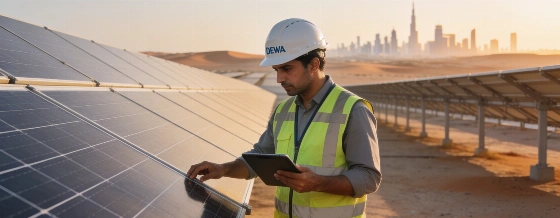
At the heart of this pledge is the Mohammed Bin Rashid Al Maktoum Solar Park, already the world's largest single-site solar installation under the independent power producer model. With a current output of 3,860 megawatts and a target to more than double capacity to over 8,000 megawatts by 2030, the project is the centrepiece of Dubai's clean energy transformation.
Clean energy and climate action take centre stage
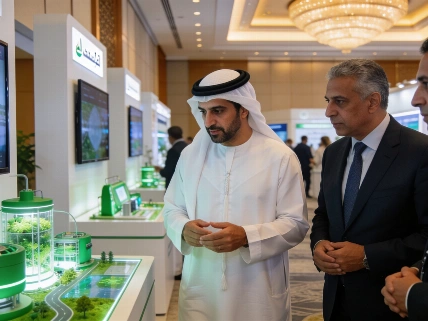
DEWA's participation in the Dubai Environment Expo 2026, scheduled for 7-8 September under the patronage of Ahmed bin Saeed Al Maktoum, is designed to put Dubai's climate ambitions on the global stage. The authority will present its latest initiatives in renewable and clean energy, climate action, and resource management, engaging directly with policymakers and industry experts in a series of technical sessions and panel discussions.
One of the headline sessions will see Hamad Salem Al Shamsi, Senior Manager for Climate Change and Sustainability at DEWA, lead a debate on "the transition to a circular economy: beyond recycling". The discussion will focus on practical strategies for resource efficiency and innovation, moving Dubai's sustainability model beyond traditional recycling to a more integrated, growth-oriented approach.
Strategic targets and operational impact
DEWA's clean energy roadmap is anchored in the Dubai Clean Energy Strategy 2050 and the Dubai Net Zero Carbon Emissions Strategy 2050. The authority's stated goal: to deliver 100% of Dubai's electricity from clean sources by mid-century. This is not a marketing slogan-it is a policy target with operational consequences for every resident, business and investor in the city.
For Dubai's energy users, the shift means a future where solar, wind and other renewables will replace fossil fuels as the backbone of the grid. The Mohammed Bin Rashid Al Maktoum Solar Park is only the most visible element; DEWA is also investing in grid integration, storage, and new models for resource management, including circular economy principles that aim to reduce waste and maximise value from every input.
Dubai's approach is not without risk. The scale of the transition demands sustained investment, regulatory clarity and technological innovation. But the city's leadership has made it clear: the era of incremental change is over. The 2050 target is now the baseline, not the aspiration.
DEWA's public commitment to full clean energy production by 2050 is a direct challenge to business as usual in the Gulf. The authority's willingness to put hard numbers, project milestones and operational strategies on the table-rather than vague promises-marks a turning point for Dubai's energy sector. If the city delivers, it will not only redefine its own environmental footprint but also set a regional standard for what is possible when ambition is matched by execution.