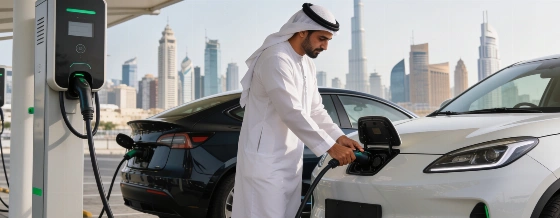
Dubai is racing to expand its electric vehicle charging network as the number of EVs in the city jumps by nearly 28 percent in a year. WETEX 2026 will spotlight how integrated clean energy and digital infrastructure are reshaping urban mobility.
Dubai's electric vehicle revolution is no longer a distant vision. By the end of 2025, the city counted 47,944 electric vehicles on its roads-up from 37,486 just a year earlier. That's a leap of more than 10,000 vehicles, or nearly 28 percent, in twelve months. The city's charging infrastructure is scrambling to keep pace, with 2,223 public charging points now operational as of Q1 2026.
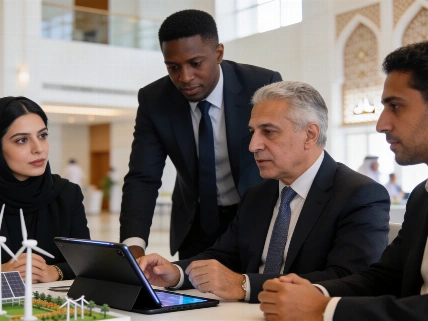
This rapid growth is not just about more cars. It's about a fundamental overhaul of how Dubai moves, powers, and connects its people and businesses. The upcoming WETEX 2026 exhibition, set for 20-22 October at Dubai World Trade Centre, will put this transformation under the spotlight, bringing together government, industry, and investors to confront the practical realities of sustainable mobility.
Charging networks under pressure as EV adoption accelerates
As electric vehicles multiply, the challenge is no longer simply adding more charging stations. The real test is delivering fast, reliable, and intelligently distributed charging that can handle the demands of both individual drivers and commercial fleets. According to the International Energy Agency, global public charging points surpassed 7 million by the end of 2025, up more than 33 percent in a single year. Dubai's own figures mirror this global surge, with infrastructure upgrades now a non-negotiable priority.
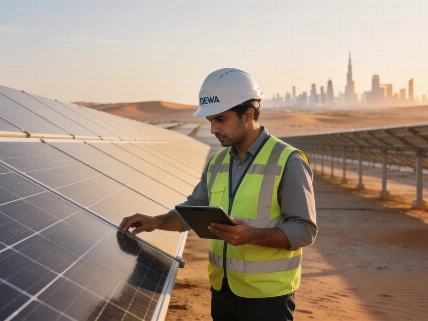
"The expansion of sustainable transport is not just about advanced vehicles," said Saeed Mohammed Al Tayer, Managing Director and CEO of DEWA and Chairman of WETEX. "It depends on building an integrated system that combines clean energy, advanced infrastructure, and digital innovation to accelerate the shift to a low-emission green economy."
WETEX 2026 to unite innovators and decision-makers
WETEX 2026 is positioning itself as the global platform where the future of mobility will be negotiated. The event's 'Green Mobility Zone' will bring together electric and hydrogen vehicles, next-generation charging solutions, and digital fleet management tools in a single arena. This is not a theoretical exercise-Dubai's urban growth and the rising expectations of residents and businesses demand practical, scalable solutions now.
International forecasts reinforce the urgency. The International Energy Agency projects global electric vehicle sales will reach 23 million in 2026, accounting for 28 percent of all new cars sold. As Dubai's own EV market expands, the city's ability to deliver robust, flexible charging infrastructure will determine whether sustainable transport becomes a reality or stalls at the starting line.
Dubai's approach is clear: collaboration between government, private sector, and research institutions is essential to turn innovation into real-world impact. WETEX 2026 is not just another industry showcase-it is a test of whether Dubai can translate ambition into action, and whether the city's infrastructure can keep up with its sustainability promises. The numbers show momentum, but the real verdict will come on the ground, as residents and businesses demand mobility that is not just green in theory, but reliable and accessible in daily life.