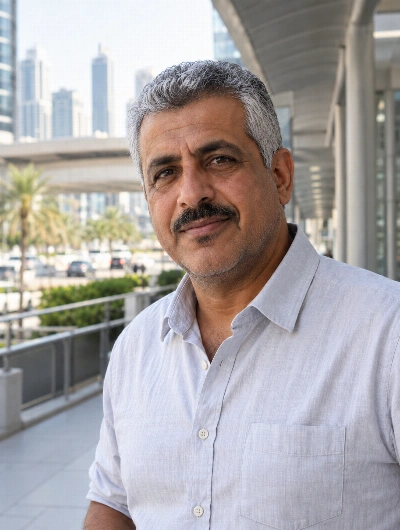
Founder and Editor-in-Chief of Dubai Times, leading the publication’s editorial direction and standards.
Khalid Al Suwaidi is a Dubai-based city affairs writer covering government decisions, public services, transport, infrastructure, education and healthcare. His reporting concentrates on what official changes mean in practice for residents, families and professionals, with particular attention to responsible authorities, effective dates, costs and next steps.
Khalid Al Suwaidi is a Dubai-born city affairs and public-services writer whose work centres on the systems, rules and institutions that shape everyday life in the emirate. Having grown up in Dubai, he has watched the city expand through new neighbourhoods, transport networks, public facilities and increasingly digital government services. That experience gave him a lasting interest in what happens after an official announcement is made: how a new rule reaches residents, which authority is responsible for it, where it applies and whether it changes anything people actually need to do.
Khalid studied Mass Communication at United Arab Emirates University, where his academic background developed his understanding of journalism, news reporting, public communication, research and media ethics. His education taught him to look closely at the relationship between institutions and the audiences they serve, as well as the responsibility journalists have when translating technical or administrative information into language the public can understand. That foundation later became particularly useful when his reporting moved towards government, regulation and public-service journalism.
His early professional experience was connected with a regional newsroom covering community affairs, local institutions and developments affecting residents across the UAE. The work exposed him to a wide range of stories that did not always produce dramatic headlines but could have significant practical consequences: road changes, municipal procedures, service interruptions, school announcements, public-safety guidance and changes in the way residents interact with government departments.
Those assignments gradually shaped Khalid’s view of what useful local journalism should do. A government statement saying that a new service has been launched is only the beginning of the story. Readers still need to know whether they can use it, how they access it, whether it replaces an existing process, what documents may be required and whether any fees or deadlines are involved.
He later worked with editorial and research teams focused on public information, urban policy and the practical impact of government decisions. That experience gave him a deeper understanding of how rules move from policy documents and announcements into actual services, procedures and enforcement. It also taught him that apparently similar institutions can have very different responsibilities, and that identifying the correct authority is often essential to understanding a Dubai story.
Khalid subsequently moved further into English-language digital publishing, working on coverage aimed at residents who may live and work in Dubai without following Arabic-language government communication closely. The city’s international population made this kind of reporting particularly important. A substantial part of his work became translating not simply between Arabic and English, but between administrative language and practical everyday language.
For Khalid, literal translation is rarely enough. An official Arabic announcement may contain terminology that has a specific administrative meaning but no neat English equivalent. Rather than replacing it with a convenient but potentially misleading phrase, he prefers to establish what the term means in practice, which authority uses it and what the reader is expected to understand or do.
Government, City Services and Everyday Life in Dubai
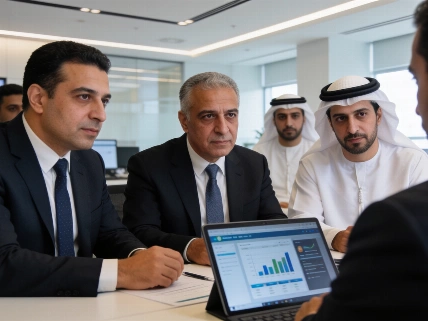
At Dubai Times, Khalid covers City News and Government, Living and Public Services, and Urban Development and Environment. His wider reporting responsibilities include Transport and Mobility, Education and Families, Health and Wellbeing, public safety, utilities, residency-related developments and other government decisions that have a direct effect on people living or working in Dubai.
His beat regularly involves authorities and service providers whose decisions influence everyday routines across the city. Depending on the story, this can include Dubai Municipality, the Roads and Transport Authority, DEWA, Dubai Police, GDRFA Dubai, KHDA, the Dubai Health Authority and other relevant local or federal institutions. Khalid does not assume that every UAE government announcement belongs in Dubai Times simply because Dubai is part of the UAE. Federal developments become part of his coverage when there is a clear connection to Dubai residents, businesses or services.
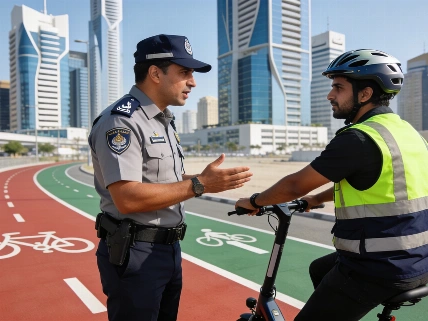
Transport is one of the most practical parts of his beat. Changes involving roads, parking, public transport or pedestrian access can immediately affect commuting time, household costs and the way people move through a neighbourhood. When a transport authority announces a project, Khalid looks beyond the announcement itself to establish which roads or stations are affected, when the change begins, how long it may last and whether alternatives are available.
The same principle applies to parking. A new parking arrangement may sound minor in an official release but can matter significantly to residents, employees and local businesses if it changes operating hours, tariffs, zones or payment procedures. Khalid treats those details as the core of the story rather than supplementary information.
Municipal services form another major part of his coverage. Dubai residents interact with a wide network of services involving buildings, public spaces, waste, food safety, inspections, permits, community facilities and city infrastructure. When procedures change, Khalid focuses on who must comply, what has changed from the previous system and whether the change creates a new responsibility, cost or deadline.
Utilities require similar precision. Changes involving electricity, water or other essential services can generate confusion if an announcement does not clearly distinguish between residential customers, businesses, landlords and property owners. Khalid aims to establish those distinctions before presenting a development as something that affects everyone.
Urban development is also central to his work, although he approaches it differently from a property-market reporter. Omar Al Nuaimi may examine what a new development means for prices, supply or investors; Khalid is more interested in what it means for the city around it. He follows roads, public spaces, pedestrian connections, utilities, community facilities, environmental programmes and infrastructure that can alter how a neighbourhood functions.
A large construction programme therefore becomes relevant to Khalid when it changes access, mobility, public amenities or the way residents use an area. He is less interested in promotional renderings and more interested in completion stages, public infrastructure, disruption during construction and what will actually be available once a project is finished.
Education and family issues form another important part of his responsibilities. Khalid follows developments involving Dubai’s private-school sector and information from the Knowledge and Human Development Authority when changes affect parents, pupils or education providers. School calendars, regulatory changes, inspections, fees, new procedures and education initiatives can all become part of his coverage when they have a clear practical consequence.
His approach to education reporting is particularly focused on parents. An announcement may describe a new initiative in broad terms, but families usually need more specific answers: Which schools are involved? Is participation mandatory? When does it start? Does it change fees, admissions or existing procedures? If those answers have not been published, Khalid makes the uncertainty clear rather than filling the gaps with assumptions.
Healthcare forms another part of his public-service beat, but Khalid maintains clear boundaries around his role. He is not a doctor and does not present himself as a medical expert. His focus is on healthcare systems, public-health measures, licensing, access to services, regulatory announcements and administrative changes involving Dubai residents.
When a health story moves into diagnosis, treatment or clinical evidence, Khalid relies on appropriate medical and public-health authorities rather than treating a government press release as sufficient evidence for a medical conclusion. That distinction allows him to cover the practical administration of healthcare without turning a city affairs profile into an unsupported medical authority.
Residency and immigration are another area where identifying jurisdiction matters. Dubai has its own institutions and service channels, while many immigration and employment rules originate at the federal level. Khalid pays attention to which body has actually issued a change and whether Dubai residents use a Dubai-specific or federal process.
That may sound technical, but it can determine whether a reader goes to the correct authority, submits the correct application or understands which rule applies. Khalid therefore avoids treating terms such as Dubai government, UAE government and federal authority as interchangeable.
Public-safety reporting follows the same practical philosophy. Police announcements, enforcement campaigns, road-safety measures, fraud warnings and emergency guidance can be highly relevant, but Khalid avoids turning routine enforcement activity into sensational crime coverage. His priority is information that helps readers understand a risk, follow a rule or avoid a preventable problem.
Dubai’s environmental development also increasingly intersects with his beat. Initiatives involving water use, energy efficiency, waste management, public greenery, sustainable transport and climate resilience can all affect the way the city operates. Khalid approaches these stories through measurable changes and practical implementation rather than repeating broad sustainability language without context.
Verification, Clarity and a Resident-First Approach
Khalid’s reporting normally begins with the primary source. When the subject involves a rule, government service, deadline, road change, public-health measure or official procedure, the authority responsible for that decision is the most important starting point. Secondary reporting can provide useful context, but it should not replace the original information when readers may act on the details.
Dates receive particular attention in his work because government announcements frequently contain several different timelines. The date a decision is announced may not be the same as the date it takes effect. Registration may open before implementation begins, and an older procedure may remain available during a transition period.
For Khalid, those distinctions are not minor technicalities. A reader can make the wrong decision simply because an article confuses an announcement date with an effective date. Whenever timing affects what someone should do, he treats the relevant dates as core reporting information.
He applies the same scrutiny to geographical scope. A change affecting one district, development or pilot zone should not automatically become a headline suggesting that the entire city has changed. Dubai’s scale means that programmes are often introduced gradually, and Khalid tries to distinguish a limited rollout from a city-wide policy.
Eligibility is another recurring issue. Government programmes can apply differently to citizens, residents, property owners, tenants, businesses, pupils, parents or particular professional groups. If an official announcement does not make those boundaries clear, Khalid avoids suggesting broader eligibility than the source supports.
Costs also matter. A digital service may be described as faster or simpler while still involving fees. A parking system may offer a new payment method while changing the amount a driver pays. A permit may have an application fee, renewal cost or penalty that is more important to the reader than the technology used to deliver it.
Khalid therefore looks for the practical financial consequences of public-service changes, even though personal finance is not his primary beat. His goal is not to perform financial analysis, but to make sure that residents understand when a government or city decision affects what they may have to pay.
Another core principle is distinguishing confirmed information from plans. Dubai regularly announces ambitious infrastructure and urban-development programmes covering several years. Khalid separates projects already under construction, initiatives with confirmed implementation dates and longer-term proposals that remain dependent on future stages.
He treats targets in the same way. A government body may state that a programme aims to achieve a particular outcome by a future date. That target is relevant, but it is not the same thing as an outcome that has already been achieved. Khalid’s reporting makes that distinction clear.
His familiarity with both Arabic- and English-language information is particularly useful when details appear first in Arabic. Rather than translating an entire announcement mechanically, he identifies the parts that change something for the reader and then checks whether supporting service pages, regulations or additional official guidance provide more detail.
This matters because headline summaries can sometimes omit conditions contained deeper in the source. A new service might be available only through a specific channel. A transport change may operate during particular hours. An education rule may apply only to certain institutions. Khalid looks for those limiting details before presenting a simple conclusion.
He also pays attention to what remains unknown. If pricing has not been announced, he says so. If an authority has not provided a start date, he does not invent one. If an official statement describes a programme but does not explain who can use it, he treats eligibility as unresolved.
For Khalid, saying that information is not yet available is preferable to providing a confident answer unsupported by the source. That restraint is especially important in service journalism because readers may use the article to make real decisions.
His writing style is deliberately free of unnecessary administrative language. Government agencies often need technical terminology internally, but readers usually need the consequence of the rule before they need the terminology. Khalid explains specialist terms where they matter and avoids repeating bureaucratic phrasing simply because it appeared in a press release.
He takes a similarly measured approach to the ambitious language often used around Dubai’s future development. Large infrastructure projects, digital-government programmes and urban initiatives can genuinely be significant without every claim in an announcement needing to become part of the article’s editorial voice. Khalid separates the authority’s stated objectives from what can already be verified.
Urgent stories receive the same discipline. Road closures, weather measures, temporary service interruptions or emergency instructions need speed, but they also need precision. Khalid prioritises the affected location, start and end times where known, alternative arrangements and the instructions residents need to follow.
His resident-first approach ultimately determines what deserves prominence. A small administrative change affecting hundreds of thousands of people may be more important to Dubai Times readers than a ceremonial government event involving senior officials but producing no practical change. Khalid evaluates stories according to their consequences for the audience rather than the status of the people appearing in the announcement.
A useful article, in his view, should reduce the amount of additional searching a reader has to do. Someone reading about a parking change should understand where it applies, when it begins and how payment works. A parent reading about an education update should know which pupils or schools are affected. A resident reading about a government service should know where the official process begins.
At Dubai Times, Khalid therefore returns to a consistent sequence of questions: What changed? Which authority is responsible? Who is affected? Where does it apply? When does it take effect? What does it cost? Is any action required? Where can the information be checked? And what important details have not yet been confirmed?
These questions shape his coverage across government, transport, infrastructure, education, health and public services. They also distinguish his work from simply republishing official announcements.
Khalid’s objective is not to make Dubai’s administrative system appear simpler than it is. His role is to identify the parts of that system that matter to the reader and explain them without losing important distinctions. In a city where residents interact with local authorities, federal institutions, regulators, utilities and private service providers, knowing who is responsible can be as important as knowing what has changed.
For him, strong city journalism is ultimately a form of practical public service. It should give residents enough verified information to understand a change, avoid unnecessary confusion and decide whether they need to act. His work at Dubai Times is built around that principle: start with the authoritative source, establish the scope, clarify the details and explain what the decision means for everyday life in Dubai.