The UAE is overhauling its approach to workforce development with specialised training and leadership programmes designed to equip Emiratis for high-demand roles in healthcare, infrastructure and AI. The strategy aims to move beyond basic job placement and create a pipeline of skilled national talent.
Artificial intelligence is no longer a distant ambition for the UAE's workforce-it is the next frontier. As Emirati graduates like Moza Salem prepare to enter the job market, the government's focus has shifted from simply filling positions to building a workforce ready to lead in critical sectors. Moza, who is about to complete her degree in environmental sciences, is already planning her next move: mastering AI through one of the country's national upskilling programmes.
This is not an isolated story. The UAE's strategy now centres on "qualitative localisation"-a deliberate effort to match citizens with roles that demand advanced skills, not just headcount. The result is a network of targeted initiatives, each designed to address a specific gap in the talent pipeline.
Specialised training for every career stage
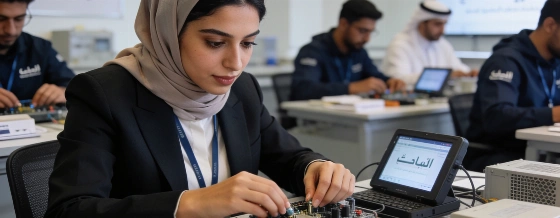
Programmes like "نافس" have become the backbone of this transformation. According to the UAE's official news agency, more than 7,700 Emiratis have completed on-the-job training, while over 3,500 have been prepared for critical healthcare roles through sector-specific tracks. The "قيادات نافس" initiative has already produced 46 private-sector leaders, and the impact is visible: Emiratis are moving into roles that once seemed out of reach.
For Moza, academic knowledge was only the starting point. She joined the "قادة مستقبل الاستدامة" programme by Masdar before even graduating, and later became one of the first participants in the "المدارس الحقلية للمزارعات الإماراتيات" initiative. This hands-on approach, championed by Sheikha Fatima bint Mubarak, is designed to turn participants into experts capable of managing their own agricultural businesses. Moza's trajectory led her to the position of Vice President of the Green Youth Council at the Environment Agency - Abu Dhabi, where she applies both her academic and practical experience.
Leadership and sector-specific development
The UAE's localisation drive is not limited to entry-level roles. The Abu Dhabi Centre for Projects and Infrastructure has launched "بُناة", a programme targeting graduates in engineering, construction and project management. Meanwhile, the "الجدارة" initiative, run by the Abu Dhabi Government Empowerment Department, and the federal "Mohammed bin Rashid Programme for Leadership Development" are focused on preparing the next generation of institutional leaders. The latter boasts a graduate community of over 850, including ministers, undersecretaries and executive directors, and has generated nearly 95 sustainable transformation projects, according to the Dubai Government Media Office.
Matching skills to market needs is now a data-driven process. The Mawaheb Talent Hub, operated by the Abu Dhabi Government Empowerment Department, uses AI-powered analytics to align Emirati jobseekers with real market demand. In 2025 alone, the centre trained over 10,000 citizens and facilitated the employment of more than 6,000 in both public and private sectors.
Exporting the UAE's model abroad
The UAE's approach is attracting international attention. Egypt has adopted elements of the Emirati model in its own government excellence and performance measurement systems, while Serbia is collaborating with the UAE to modernise its public administration. These partnerships are not symbolic-they are built on the practical transfer of tested frameworks and measurable outcomes.
The UAE's workforce strategy is no longer about ticking boxes for localisation quotas. It is about building a national talent pool that can compete in the most demanding sectors, from healthcare to AI. The numbers show real progress, but the real test will be whether these programmes can keep pace with the rapid evolution of the job market. For now, the UAE is setting a regional benchmark for how to turn policy into practical results-and the rest of the region is watching closely.