
The UAE has accelerated its oil export independence and defence capabilities following a period of intense conflict, with a record number of missile interceptions, a strategic exit from OPEC, and rapid infrastructure upgrades reshaping the nation's economic and security landscape.
When the UAE announced its departure from OPEC after nearly six decades, it was not a reactionary move but the culmination of a strategy forged under fire. The decision, made public in April while the region was still reeling from missile attacks, marked a definitive break from production quotas that had long constrained the country's ambitions. ADNOC's output surged past four million barrels per day, and for the first time, the UAE could sell, build, and negotiate on its own terms-no longer bound by external ceilings.
This newfound autonomy did not emerge in a vacuum. Between late February and early April, the UAE's Ministry of Defence intercepted 537 ballistic missiles, 26 cruise missiles, and over 2,200 drones. The country's layered defence systems, including domestically developed technologies, were tested relentlessly. Unlike a single catastrophic strike, the pressure was daily and unyielding. Yet, the cities stood, losses remained limited, and the national defence industry emerged with proven systems and a new sense of credibility.
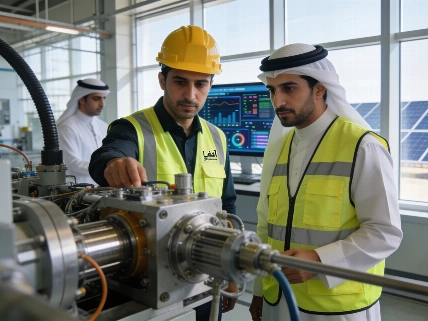
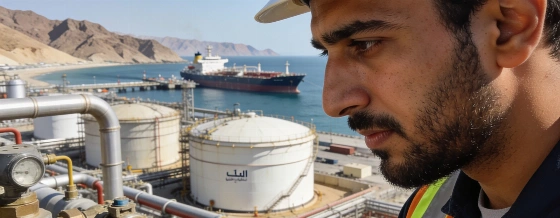
Infrastructure, too, was forced into overdrive. The closure of the Strait of Hormuz-long a strategic vulnerability-transformed the Habshan-Fujairah pipeline from a backup into the main artery for oil exports to the Gulf of Oman. Shipments from the east coast soared at the height of the crisis. Not content with a single route, ADNOC, under the direction of Sheikh Khaled bin Mohamed bin Zayed Al Nahyan, accelerated plans for a second pipeline, targeting operational status by 2027. The message from the top was unambiguous: reliance on Hormuz must drop to zero, regardless of its status.
Fujairah's role shifted dramatically. No longer just an alternative to Dubai's Jebel Ali, it became the nation's insurance policy-handling oil, storage, shipping, and a port undergoing reconstruction to ensure trade is never again hostage to a single chokepoint. Meanwhile, Dubai's ports recalibrated, seeking new stations further east, as the country's export map was redrawn in real time.
The war's impact extended beyond oil and missiles. Data centres, once seen as glass towers of progress, were exposed as potential targets. In response, the UAE secured broader access to advanced equipment and microchips from Washington, a reward for its resilience and reliability under pressure. But this new partnership comes with higher expectations for transparency and alignment, especially as technology becomes a matter of national security.
On the ground, the economic shock was absorbed unevenly. Abu Dhabi shouldered the burden through oil, while Dubai's economy leaned on tourism and trade. Despite the turbulence, the country's credit rating held firm at a high level, signalling that public finances withstood the blow. Social cohesion proved equally robust-institutions functioned, and society resisted fragmentation and rumour, a strength that rarely appears in official statements but is critical in times of crisis.
What has emerged is not a state celebrating survival, but one fundamentally altered by adversity. Defence systems are now battle-tested, the military industry has real-world credibility, Fujairah is central to the nation's logistics, oil policy is unshackled from old constraints, and technology is recognised as a core pillar of national security. The relationship with the UAE's largest international partner is clearer, but also more transactional, with both sides aware of the costs and benefits.
Strength, in this context, is not measured by the enemy's failure to topple a city, but by the speed at which the UAE rebuilt, retooled, and redefined its strategic priorities amid the wreckage. The country's leadership has demonstrated that resilience is not a slogan but a set of hard-won capabilities-tested, proven, and now embedded in the national fabric. The UAE's post-war trajectory is not about returning to the status quo, but about accelerating forward, determined never to be caught unprepared again.