The UAE has shifted from relying on oil revenues to building a diversified economic base, investing heavily in infrastructure, advanced industries and future technologies. This transformation is reshaping the country's role in global trade and securing long-term prosperity for future generations.
When the UAE's sovereign wealth fund "Mubadala" reported managed assets of AED 1.4 trillion and a five-year annual return of 10.7 percent, it was more than a financial milestone. It was a signal that the country's oil wealth is no longer just a safety net-it is now the engine behind a new era of economic self-sufficiency and global competitiveness.
For decades, the UAE's prosperity was synonymous with oil. But the leadership's strategy has been to convert that finite resource into a springboard for a diversified, resilient economy. As Sheikh Mohammed bin Rashid Al Maktoum put it, the real achievement is not the size of the wealth, but how it is transformed into "new sectors, future industries, and an economic base for generations of the Emirates."
Infrastructure as the launchpad for economic reinvention
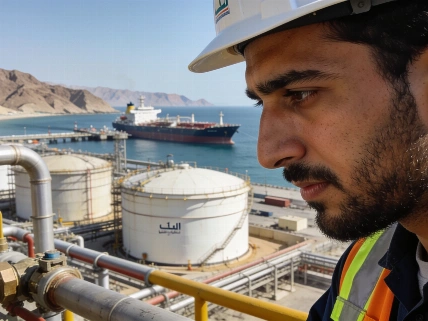
The UAE's transformation began with a relentless focus on infrastructure. Billions from oil revenues were channelled into building world-class ports, airports, roads, and digital networks. These were not vanity projects-they became the backbone of a logistics and trade ecosystem that now connects Asia, Europe and Africa through the Emirates. Jebel Ali Port and Dubai International Airport are not just transit points; they are magnets for global commerce, manufacturing and investment.
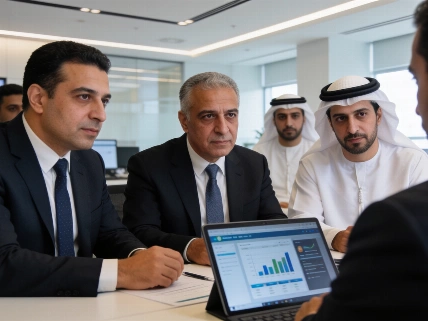
But infrastructure alone does not create value. The UAE's model links physical assets with free zones, financial services, and digital platforms, creating a tightly woven economic web. Each sector-trade, tourism, finance, logistics, technology-feeds into the next, multiplying opportunities and insulating the economy from external shocks.
From oil dependency to a multi-engine economy
Official data now shows non-oil sectors contribute around 78 percent of the UAE's GDP. This is not just a matter of adding new industries; it is about building a system where manufacturing, tourism, real estate, aviation, and technology reinforce each other. The result: an economy that can weather volatility in global energy markets and still deliver growth.
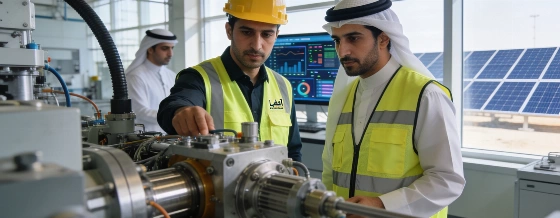
The next frontier is advanced manufacturing. The government's push to localise production, attract high-value industrial investment, and embed innovation is visible in initiatives like "Make it in the Emirates." The focus is not on traditional factories, but on sectors such as artificial intelligence, clean energy, and space technology-areas expected to define the global economy in the coming decades.
Early investment in these fields is not a luxury. It is a calculated move to ensure the UAE is not left behind when new technologies become prerequisites for global competition. By building expertise and infrastructure now, the country positions itself to lead rather than follow.
Energy transition without abandoning the present
Unlike some oil producers, the UAE has not treated the global energy transition as a zero-sum game. Instead, it is expanding its energy mix-investing in solar, nuclear, and emissions-reduction projects-while recognising that oil and gas will remain part of the equation for years. The goal is to maintain competitiveness in both legacy and future energy sectors, using sovereign investment to bridge the gap.
Mubadala's portfolio is a case in point. Its investments span AI, digital infrastructure, advanced manufacturing, and life sciences, with AED 45 billion contributed to the UAE's GDP in 2025 and nearly 98,000 jobs supported. The fund's strategy is not just about financial returns; it is about building national champions and embedding new capabilities in the local economy.
Building companies not just assets
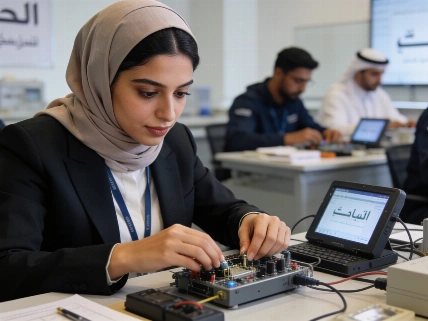
Physical infrastructure and capital are only part of the equation. The UAE's leadership understands that sustainable prosperity depends on building strong national companies, developing local talent, and embedding research and innovation. The aim is to create an ecosystem where Emirati firms can compete globally, not just operate domestically.
This is why the country's economic diversification is not measured by the number of new projects, but by the ability to generate value and opportunity for decades to come. Ports attract factories and distribution centres. Airports drive tourism and business. Universities build human capital. Investment in AI boosts productivity across all sectors. The system is designed to be self-reinforcing.
What sets the UAE apart is the long-term vision: wealth generated today is systematically converted into productive assets, knowledge, and skills that will outlast any single resource cycle. The real test of success will not be the infrastructure built or the companies launched, but whether the next generation inherits an economy capable of constant renewal and growth. The evidence so far suggests the UAE is not just preparing for the future-it is actively building it, one sector at a time.