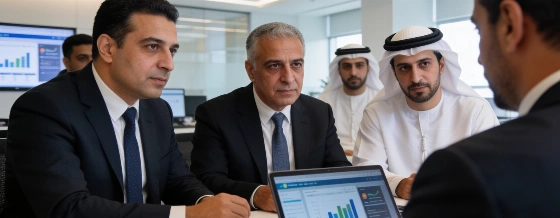
Syrian executive leaders have completed an intensive UAE-led programme in Dubai, gaining direct exposure to the Emirates' government modernisation strategies, digital transformation, and leadership development. The initiative aims to transfer practical know-how to support institutional reform in Syria.
Dubai has become the latest proving ground for the UAE's ambition to export its government modernisation playbook, as a select group of Syrian executive leaders completed a high-level training programme designed to transfer the Emirates' hard-won expertise in public sector reform.
At the centre of this initiative is the "برنامج القيادات التنفيذية للجمهورية العربية السورية", a bespoke programme orchestrated by the UAE's Ministry of Cabinet Affairs through its Government Knowledge Exchange Office. The goal: to immerse Syrian officials in the UAE's approach to leadership development, digital transformation, and the relentless drive to eliminate bureaucracy from public services.
Direct exposure to UAE government operations
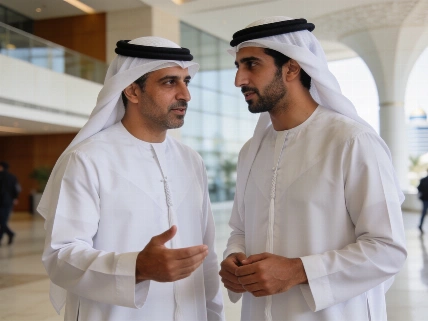
Unlike conventional workshops, the programme placed Syrian participants inside the engine room of the UAE government. Over a series of field visits, hands-on workshops, and direct meetings with Emirati officials, the group observed first-hand how the UAE has re-engineered its public sector-from AI-driven service delivery to the radical simplification of administrative procedures.
Sessions covered a spectrum of topics including government accelerators, artificial intelligence, policy and legislative design, human resources, digital data, and the UAE's signature approach to "zero bureaucracy". Each module paired theory with real-world case studies, ensuring participants left with actionable insights rather than abstract concepts.
Strategic intent and regional implications
Minister of Cabinet Affairs, محمد عبدالله القرقاوي, made clear that this is not a one-off gesture but a calculated extension of the UAE's regional influence. "Investing in government leaders is an investment in the future of societies," he stated, highlighting the UAE's willingness to share its models with "brotherly and friendly countries" to raise the bar for public sector performance across the region.
The UAE's knowledge transfer is positioned as strictly developmental, with officials emphasising that the programme is rooted in institutional capacity-building rather than political alignment. The underlying message: the Emirates sees its governance model as a regional export, and is prepared to back that up with direct, practical engagement.
What this means for Dubai and the UAE
For Dubai, hosting such programmes cements its status as the region's laboratory for government innovation. The city's institutions are not just serving local residents-they are now actively shaping the next generation of public sector leaders across the Middle East. This approach reinforces Dubai's reputation as a trusted partner for institutional reform, and signals to other governments that the UAE's expertise is available for export-on its own terms.
By embedding Syrian officials in the day-to-day workings of its ministries, the UAE is betting that practical exposure will drive real change back home. The move is as much about soft power as it is about technical assistance: the Emirates is building a network of regional leaders who have seen, up close, how Dubai's government machine operates-and who may seek to replicate its successes in their own countries.
Dubai's willingness to open its doors to foreign officials for deep-dive training is not charity. It is a strategic investment in regional stability and influence, executed through the language of institutional development rather than overt politics. The message is unmistakable: the UAE intends to set the standard for government performance in the region, and is prepared to shape the future of public administration far beyond its own borders.