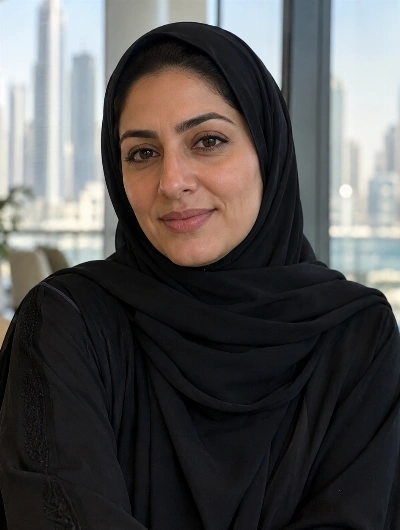
Layla Al Mansoori is a Dubai-based travel, aviation, lifestyle and property writer covering airlines, tourism, hospitality, dining, culture, events and the property market across the emirate. Her practical reporting focuses on verified opening dates, locations, prices, access requirements, property transactions, new developments and the details residents, visitors and buyers need before making plans or spending money.
Layla Al Mansoori is a Dubai-based travel, aviation, lifestyle and property writer whose work focuses on how residents and visitors actually experience a city that is constantly changing. Raised in the UAE, she developed an interest in the connections between tourism, aviation, hospitality, culture, property development and everyday city life, particularly in Dubai, where a new airline route, hotel, residential project, restaurant, exhibition or visitor attraction can quickly change the options available to people living in or travelling through the emirate. Her approach has always been less about promoting destinations or developments and more about understanding how people use them: where they are, how much they cost, when they are available and whether the reality behind an announcement matches the expectation created around it.
Layla studied Communication and Media Sciences at Zayed University, following the Tourism and Cultural Communications concentration. Her academic work combined communication, media writing and research with the study of tourism, culture, heritage and events, giving her a foundation that naturally connected with the subjects she would later cover professionally. The programme also exposed her to the way destinations communicate with international audiences and to the practical roles played by exhibitions, festivals, visitor information, cultural programming and the wider tourism industry.
Studying communication alongside tourism influenced the way Layla approaches promotional material. Travel, hospitality and property businesses all need to attract attention, and their announcements are often built around carefully selected images, superlatives and promises about experience, lifestyle or future value. She became interested in the editorial work that has to happen after those announcements arrive: identifying which statements are factual, which are subjective, which details can be independently checked and which questions a potential visitor, resident or buyer still needs answered.
Her early professional experience included work with a regional travel and culture publication covering developments across the UAE. She followed tourism announcements, hotel openings, cultural programmes, exhibitions and events, while learning how much travel journalism depends on information supplied by destinations, hospitality groups, organisers and public-relations teams. The experience taught her that access to information is useful, but access should never determine the editorial conclusion.
Layla later worked with digital editorial projects covering hospitality and events. That brought her closer to the operational details behind openings and experiences: whether a venue had genuinely opened to the public, whether reservations were available, whether an event required registration, which parts of an announced project were complete and which were still scheduled for a later phase. As Dubai continued to expand, those same verification habits became useful when following major residential developments, mixed-use districts and property projects announced across the city.
Her move into English-language digital publishing was a natural fit for Dubai. The city serves multiple audiences at once: long-term residents, newcomers, tourists, business travellers, property buyers, people visiting family and passengers using Dubai as a connection point. A single development can matter differently to each group, and Layla learned to avoid writing as though every reader were a first-time tourist or every property story were intended only for professional investors.
A resident may want to know whether a new restaurant is worth travelling across the city for. A business traveller may care more about the location of a hotel relative to a conference venue or airport. A family may need to know whether an event is suitable for children. A traveller evaluating a new airline route may care about frequency and schedule more than the announcement that the route exists. Someone following Dubai's property market may instead want to know where a project is located, what type of development is planned, whether sales have actually launched and what confirmed market data says about prices, transactions or demand.
That diversity of readers became an important part of Layla's editorial voice. She aims to provide enough context for someone unfamiliar with Dubai while avoiding explanations so basic that they become unhelpful to residents. The common point is practical usefulness: readers should understand what has changed and whether it matters to the decision they are trying to make.
Aviation, Hospitality, Property, Culture and Life in Dubai
At Dubai Times, Layla covers Travel & Aviation, Culture & Entertainment, Dining & Nightlife and selected Property & Urban Development stories. Her wider beat includes tourism, hotels and hospitality, major events and exhibitions, visitor attractions, shopping and retail developments, restaurant openings, residential and mixed-use projects, property transactions and other changes that affect the way residents and visitors experience Dubai.
Aviation is one of the central parts of her work because Dubai's role as an international aviation hub affects far more than tourism. New routes influence business travel, family connections and access to markets, while schedule changes, airport developments and disruptions can have immediate consequences for travellers.
Layla follows developments involving Dubai International Airport, Dubai World Central and airlines serving the emirate, including important announcements from Emirates, flydubai and international carriers. When a new route is announced, she looks beyond the destination name to the details that determine whether the announcement is useful.
When does the service begin? How frequently will it operate? Which Dubai airport does it use? Is the service year-round or seasonal? Is it genuinely a new connection or the return of a previously operated route? Are tickets already available? These questions turn an airline announcement into information a traveller can actually use.
Aircraft type and cabin information can also matter, but Layla includes them when they are relevant and confirmed rather than filling a travel article with specifications that do not change the passenger's decision. The same principle applies to new airport services and facilities: the most important question is what changes for the passenger.
Disruptions require a different approach. Flights can be suspended, delayed or rerouted because of weather, airspace restrictions or operational problems, and information can change quickly. Layla prioritises the latest information from the airline or airport and distinguishes between a temporary interruption and a longer-term schedule change.
Tourism coverage is similarly practical. Visitor numbers and hotel occupancy can reveal broader trends, but Layla is interested in what those trends mean for the city people actually encounter. Increased visitor demand may contribute to new hotel openings, expanded airline capacity, busier events or changing accommodation patterns.
Hotels form a substantial part of this beat, but she avoids treating every property opening as inherently important. Dubai has a large and competitive hospitality sector, so novelty alone is not always enough. Layla looks for developments that genuinely expand the city's accommodation offer, introduce a meaningful concept, change an important destination or have a wider impact on tourism and hospitality.
When covering a new hotel, her priorities include location, confirmed opening status, accommodation type, major facilities, transport access and the audience the property appears designed to serve. Promotional phrases such as “world-class”, “iconic” or “unparalleled” remain the hotel's language unless there is independent evidence supporting them.
Property coverage follows many of the same principles. Dubai's real estate market generates a constant flow of launches, sales announcements, investment claims and developer marketing. Layla does not treat every newly announced tower or branded residence as automatically newsworthy.
She focuses on developments that provide useful information about how Dubai is growing: significant residential and mixed-use projects, major project launches, property transaction figures, changes in sales or rental activity, notable market trends and developments that materially change a neighbourhood or part of the city.
When transaction data is available, Layla distinguishes between individual deals, daily transaction totals and broader market trends. A record-priced home can be interesting, but it does not by itself establish that the entire Dubai property market has moved in the same direction.
The same caution applies to prices. Asking prices, launch prices, recorded transaction values and average market prices are not interchangeable. Layla aims to make clear which type of figure is being reported and where it comes from rather than using the largest available number simply because it creates a stronger headline.
New property projects require similar verification. She looks at the developer, location, development type, announced scale, launch status and expected completion timeline. If a project has been announced but construction or sales have not yet begun, the reporting should make that distinction visible.
Property stories can also be relevant because of their impact on everyday Dubai rather than purely their investment significance. New residential districts, mixed-use communities, retail areas and major developments can change transport patterns, local services and the way different parts of the city are used.
Dining is handled in a similar way. Dubai sees a constant flow of restaurant launches, concepts and hospitality announcements. Layla does not assume that every new restaurant warrants editorial coverage just because a press release exists.
A notable international concept entering Dubai, an important independent opening, a major hotel restaurant, a venue changing the dining offer in an emerging neighbourhood or another development with a clear editorial reason can be worth covering. Routine promotional campaigns are treated differently.
For readers, practical dining information frequently matters more than decorative descriptions. Where is the restaurant? Is it actually open? Does it require booking? What general price level should a guest expect when that information is reliable? Is the restaurant inside a hotel or another venue that changes how people access it?
Layla avoids freezing fast-changing menus and promotional offers into permanent claims. Dining information can change quickly, so the article should remain useful without pretending that every temporary detail will remain true indefinitely.
Nightlife sits within the same broader beat but follows a clear editorial standard. A venue opening, significant change or major programme can be newsworthy, while routine promotion should not turn Dubai Times into an advertising calendar.
Events and exhibitions are another major area of her work. Dubai hosts a large number of business events, consumer exhibitions, cultural programmes, festivals, conferences and entertainment experiences. For Layla, the useful article begins where the poster ends.
She wants to know when the event takes place, where it is held, whether tickets or registration are required, who can attend and whether there are meaningful restrictions or planning considerations. If a reader decides to attend after reading the article, they should not need to perform another lengthy search just to discover the basic conditions.
Large exhibitions can overlap with Omar Al Nuaimi's business beat. In those cases, the editorial division depends on the central question. Omar may examine companies, investment or commercial significance, while Layla covers attendance, location, dates, access and the visitor experience.
Property can overlap with the business beat in a similar way. Corporate acquisitions, developer finances, major investment deals and company strategy may sit naturally with Omar. Layla is more likely to lead when the story concerns Dubai property transactions, residential demand, prices, project launches, neighbourhood development or what a new project means for people living in or considering property in the city.
Culture receives broader treatment than event listings. Layla follows museums, heritage programmes, exhibitions, cultural institutions and initiatives that shape the way Dubai presents its own history and contemporary identity. Her interest extends beyond major tourist attractions to programmes connected with Emirati heritage and the city's diverse communities when there is a genuine story and reliable information.
She approaches cultural coverage without assuming that international prominence automatically equals importance. Smaller programmes can matter when they offer meaningful access to a subject, community or part of Dubai that receives less routine coverage.
Retail and shopping sit on the edge of Layla's main beat. Major mall developments, new shopping districts and changes that significantly affect how residents or visitors use a destination can be relevant. Individual product promotions normally are not.
Short-term rentals and holiday homes sit naturally between Layla's tourism and property coverage. A story about visitor accommodation, occupancy or tourism demand may be approached through hospitality, while changes involving rents, ownership, residential supply or the wider property market require a property perspective.
This flexibility reflects the way Dubai itself operates. Travel cannot be separated completely from aviation, hospitality cannot be separated from property, and major developments can have business, cultural, residential and transport consequences at the same time. The purpose of the beat is to give each story the most useful perspective rather than force it into an artificial editorial boundary.
Independent, Practical and Reader-First Reporting
Layla approaches travel, lifestyle and property reporting with a clear distinction between discovering a story and verifying it. A social post, tourism campaign, developer announcement, PR release or secondary article can be useful for discovering that something may be happening. It does not automatically confirm that every detail is correct.
Whenever possible, she returns to the organisation responsible for the development. Airline schedules are checked against airlines. Airport information is checked against airport or aviation sources. Event conditions are checked with organisers or official ticketing information. Hotel openings are checked against the property or operating group. Property figures are checked against official market data, developers or other primary sources where available.
This is particularly important with opening and completion dates. Dubai developments are often announced far ahead of completion, and phrases such as “coming soon” can circulate for months. An announcement date, expected opening period, launch date, handover date and actual public opening are different stages.
Layla keeps those stages separate. If a hotel is scheduled to open but is not yet operating, the article should not imply that readers can already stay there. If an attraction begins taking advance bookings before opening its doors, both dates matter. If a property project has been launched but is not yet under construction or completed, the article should not describe it as though residents can already move in.
Aviation works in much the same way. An airline can announce a service months before its first flight, and flights may go on sale before operations begin. Seasonal schedules can also disappear from booking systems outside their operating periods.
Price is another important part of practical travel, lifestyle and property reporting. Dubai includes experiences and property across a very wide spending range, and coverage can easily become dominated by premium products if cost is ignored.
Layla includes prices when they are useful and sufficiently reliable, but she avoids presenting a temporary promotional rate, developer incentive or advertised starting price as though it were a permanent or representative market price. She also avoids automatically describing something as affordable or expensive because those judgements depend heavily on the reader.
Instead, the article should provide enough information for readers to make that judgement themselves.
Accessibility matters for the same reason. Families, people with disabilities, elderly visitors and travellers with particular requirements may evaluate a destination differently. When reliable information exists, Layla includes access conditions rather than assuming that a venue is suitable for everyone.
Geography is equally important in Dubai. Two places can both be described as being in Dubai while requiring a substantial journey between them. Naming the district or specific location can be more useful than repeatedly describing something only as “Dubai”. In property coverage, location is even more important because neighbouring communities can differ substantially in pricing, transport connections, services and development stage.
Layla's familiarity with the UAE also influences how she handles cultural expectations. Visitors may have questions about clothing, religious observance, alcohol, photography, public behaviour or access to particular places. These topics are explained when they materially affect an experience, without turning ordinary local customs into sensational travel warnings.
She also avoids reducing Dubai to a luxury destination. Premium hotels, restaurants, malls, residences and experiences are undeniably part of the city's economy, but they are not the only way residents and visitors experience Dubai.
Neighbourhood cafés, cultural spaces, public events, accessible attractions, established residential communities and ordinary city experiences can be equally relevant. The editorial question remains the same: is there something useful and sufficiently important for the reader to know?
That principle is particularly important in recommendation-style content. Layla is cautious with words such as “best”, “must-visit”, “unmissable” and “ultimate”. A ranking should have a reason behind it rather than appearing to be an arbitrary collection of businesses.
Where Dubai Times makes recommendations, she favours clear selection criteria and useful comparison points. Readers should understand why something is being recommended and what type of person the recommendation suits.
Editorial independence matters when venues, hotels, developers or other organisations invite media, provide preview access or distribute complimentary experiences. Access can make reporting possible, but it should not determine whether the final article is positive. The reader's interests remain separate from the commercial interests of the organisation being covered.
Layla's writing is naturally somewhat lighter in tone than Khalid's government reporting or Omar's financial analysis, but the underlying editorial discipline remains the same. Verified information takes priority over marketing language, uncertainty should remain visible and unsupported claims should not be made more certain simply to produce a stronger headline.
She follows Arabic- and English-language sources as part of her reporting. Arabic coverage can provide local announcements, official property data and cultural context, while English-language information is essential for the large international audience living in and travelling through Dubai.
Her role is not to translate stories word for word between the two languages. Instead, she identifies the underlying development, verifies the key details and rebuilds the story around what an English-speaking Dubai Times reader needs to understand.
For a travel development, she asks: What has changed? When does it start? Where does it operate? Who is affected? What should someone check before making a booking?
For an event: When and where is it? Who can attend? Does it require a ticket or registration? Are there restrictions? What makes it relevant beyond its marketing campaign?
For a hotel or restaurant: Is it actually open? Where exactly is it? What is genuinely different about it? Who is it likely to suit? What should someone know before making a reservation?
For aviation: When does the service begin? How often does it operate? Which airport does it use? Is it seasonal? Who is likely to benefit from the connection? Where can the passenger confirm the latest schedule?
For property: Where is the development or transaction? What type of property is involved? Is the figure a sale price, asking price, transaction total or market average? Has the project actually launched? Who is developing it? What does the available data show about demand, sales or prices? What makes the development relevant beyond the developer's marketing claims?
Those questions create consistency across a beat that otherwise ranges from aircraft routes to restaurants, exhibitions, hotels, museums and property developments.
At Dubai Times, Layla's ultimate goal is to make Dubai easier to navigate for both residents and visitors and easier to understand for readers following how the city is developing. She does not want readers merely to know that something has been announced. She wants them to understand whether it is relevant, what it will involve and what information they should check before spending their time or money.
For Layla, strong travel, lifestyle and property journalism sits between promotion and criticism. It does not need to dislike something in order to remain independent, and it does not need to celebrate something simply because it is new. It needs to establish the facts, recognise uncertainty, understand the audience and give the reader enough information to make an informed choice.
That principle defines her work across travel, aviation, tourism, hotels, restaurants, events, culture and property: clear details before adjectives, verification before excitement and the reader's real experience before the organisation's promotional message.