
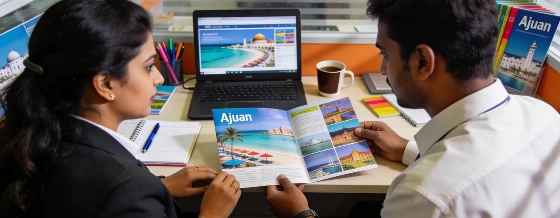
Ajman's Department of Tourism, Culture and Media has introduced the Sharik Ajman growth incentives programme during a promotional tour across Mumbai, Chennai and Hyderabad, seeking to convert Indian travel partnerships into measurable visitor growth for the emirate.
Ajman's Department of Tourism, Culture and Media has moved beyond traditional promotion, rolling out the Sharik Ajman growth incentives programme directly to Indian travel industry leaders in Mumbai, Chennai and Hyderabad. The initiative is designed to turn partnership rhetoric into concrete visitor numbers, with a clear focus on measurable results rather than generic branding.
By targeting India's travel sector with tailored incentives, Ajman is making a calculated play for a larger share of outbound Indian tourism. The emirate's officials did not simply present Ajman as another destination-they offered tangible rewards for partners who deliver increased bookings and visitor flows, signalling a shift from passive marketing to active commercial engagement.
Sharik Ajman programme details
The Sharik Ajman programme, announced during the India roadshow, is structured to reward travel sector partners who commit to promoting Ajman and can demonstrate real growth in visitor numbers. The Department's approach is to incentivise partners to run more aggressive campaigns, with the explicit goal of boosting bookings and establishing Ajman as a preferred destination for Indian travellers.
Mahmood Khaleel Alhashmi, Director General of the Department of Tourism, Culture and Media, stated that the India tour was not just about visibility but about understanding the needs of Indian travel partners and co-designing more competitive, attractive tourism experiences. He emphasised that the new programme is a step beyond promotion, positioning partners as core drivers of Ajman's tourism growth.
Strategic implications for Dubai and the UAE
While Ajman's campaign is focused on its own visitor numbers, the move has wider implications for the UAE's tourism landscape. Indian travellers represent a critical market for the entire region, and Ajman's direct incentive model could prompt other emirates-including Dubai-to reassess how they engage with international travel partners. The competitive push for Indian tourists is intensifying, and the success or failure of Ajman's approach will be closely watched by industry players across the UAE.
Ajman's willingness to tie incentives to actual performance, rather than vague partnership promises, marks a notable shift in how emirates are approaching international tourism growth. If the Sharik Ajman programme delivers on its promise, expect to see similar models adopted elsewhere-and for the stakes in the Indian outbound market to rise accordingly.