
Dubai Metro is on track to reach 2.96 billion riders by mid-2026, with major expansions underway including the Blue and Gold Lines. The network's rapid growth signals a new era for public transport, reshaping daily life and city infrastructure.
Dubai's transport ambitions are not slowing down. With the Blue and Gold Lines under construction and a projected 2.96 billion riders by the end of the first half of 2026, the Dubai Metro is rewriting the city's mobility playbook. The scale of this transformation is hard to overstate: what began as a bold experiment in 2009 is now the backbone of daily life for millions.
Forget the old image of Dubai as a city built for cars. Today, the Metro's 90-kilometre network and 53 stations are not just moving people-they are redrawing the map of where residents live, work, and spend their time. In just the first six months of this year, the Red and Green Lines carried 136.5 million passengers, a figure that would have seemed unthinkable when the first 16 trains rolled out in 2009.
Blue and Gold Lines drive next phase of growth
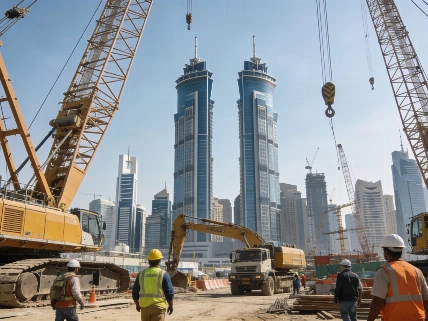
The next leap is already underway. The Blue Line, now more than 20% complete, will add 30 kilometres and 14 stations, connecting nine key districts and serving an estimated one million residents. Its engineering feats are headline-worthy: International City's station will plunge 21 metres below ground, while the Emaar station is set to become the world's highest at 74 metres. Construction is relentless, with over 10,000 workers and 180 rail specialists on site, and a field factory churning out 24 tunnel segments daily to keep pace with demand.
Meanwhile, the Gold Line promises to push the boundaries even further. Planned as Dubai's first fully underground metro route, it will stretch 42 kilometres and feature 18 stations, with tunnel lengths tripling those of the current network. The investment is equally ambitious, with a budget of AED 34 billion committed to the project.
Stations become city landmarks
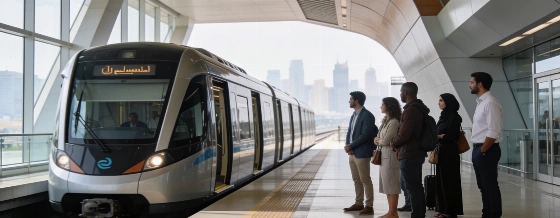
Dubai's Metro stations are more than transit points-they are architectural statements. From the outset, the city insisted on designs that blend modernity with function, resulting in spacious, well-lit hubs that have become icons in their own right. Some stations are now as recognisable as the neighbourhoods they serve, seamlessly integrated into business districts, residential areas, and tourist hotspots.
Operational precision is a hallmark of the system. Punctuality rates hover at 99.7%, and the network's digital environment is constantly evolving, with 9,000 new signage and advertising panels updated in 2026 alone. The 'nol' card, now synonymous with Dubai's public transport, has made fare payments frictionless and helped drive adoption across all demographics.
What this means for Dubai residents
The Metro's relentless expansion is not just about numbers-it is fundamentally changing how Dubai functions. As new lines open, entire districts will gain direct access to the city's economic and leisure hubs, reducing reliance on cars and reshaping property values. The integration of advanced tunnelling, digital systems, and high-frequency service is setting a new standard for urban mobility in the region.
Seventeen years after its launch, the Dubai Metro is no longer a novelty. It is a critical utility, a catalyst for urban development, and a daily reality for millions. The city's willingness to invest in massive infrastructure-while maintaining near-flawless operations-signals a clear intent: Dubai is betting its future on public transport, not just as a convenience, but as the engine of its next era of growth. Residents and investors who ignore this shift do so at their own risk, because the city's centre of gravity is moving-one station at a time.