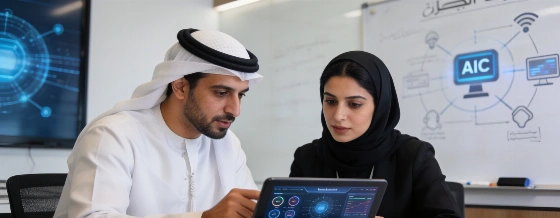
Dubai's Roads and Transport Authority has launched the second round of its 'قيادي متقدم' programme, targeting Emirati leaders to drive AI-powered decision making and institutional transformation. The initiative is designed to align with Dubai's strategic priorities and future-proof its leadership pipeline.
Dubai's Roads and Transport Authority (RTA) has escalated its investment in local leadership by launching the second cohort of its 'قيادي متقدم' programme, a move that places artificial intelligence at the heart of public sector decision making. This initiative is not just about training-it is a calculated effort to ensure that the next generation of Emirati leaders can navigate and shape the city's rapidly evolving strategic landscape.
Unlike traditional leadership courses, 'قيادي متقدم' is engineered to produce tangible results. Participants are expected to convert their learning into actionable projects and measurable operational improvements within RTA's various sectors. The programme's structure blends theoretical knowledge with hands-on application, ensuring that leadership development is not an abstract exercise but a direct contributor to Dubai's institutional performance.
Strategic focus on AI and institutional change
Developed in partnership with Hult Ashridge International Business School, the programme targets high-potential Emirati talent from RTA's second and third leadership tiers. The curriculum is sharply focused on integrating AI tools into decision making, managing organisational transformation, and benchmarking against global best practices. Sessions include leadership coaching, innovation management, change leadership, and sustainability-each designed to build a leadership cadre ready for the next wave of government priorities.
Azari Mohammed, Executive Director of Human Resources and Development at RTA, confirmed that the programme is a cornerstone of the authority's 2025-2030 HR strategy. "We are preparing Emirati leaders to take on strategic roles that will sustain Dubai's government excellence and support comprehensive development," she said. The initiative is also intended to enhance employee experience and foster a culture of innovation and diversity within a sustainable work environment.
Impact and accountability
RTA is not leaving the impact of 'قيادي متقدم' to chance. The authority will track how participants translate their training into real-world initiatives, with a clear expectation that these projects will deliver operational value both during and after the programme. This approach signals a shift from generic leadership development to a model where investment in human capital is directly tied to measurable institutional outcomes.
For Dubai, the stakes are clear: as the city positions itself as a global leader in digital government and AI adoption, the quality and readiness of its public sector leadership will determine whether strategic ambitions become reality. RTA's approach-rooted in accountability, practical application, and future-focused skills-sets a new benchmark for how government entities can build leadership pipelines that are both resilient and adaptive.
Dubai's leadership rhetoric is often bold, but with 'قيادي متقدم', RTA is putting substance behind the slogans. By demanding that leadership development delivers operational results, the authority is challenging the status quo of public sector training. The real test will be whether these Emirati leaders can convert AI-driven insights into decisions that tangibly improve Dubai's transport and mobility systems. If RTA's model succeeds, it will not only future-proof its own leadership but could also serve as a template for other government bodies seeking to turn strategic vision into operational reality.