Dubai's electric vehicle push is moving fast. The city's charging network is growing to keep up with a sharp rise in EVs. By the end of the first half of this year, more than 51,200 electric vehicles were registered in Dubai. That's a 22.8 percent jump from the same period in 2025. Emirates News Agency (WAM) says this growth matches the goals of the Dubai Economic Agenda D33 and the UAE Vision 2031, both focused on cleaner transport and energy. The charging network now has 2,445 points, up 10 percent since January. Public charging stations alone hit 2,223 by the end of Q1 2026, a 19 percent rise in just three months, according to Arabian Business.
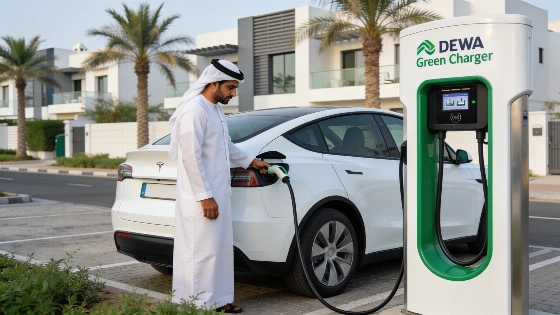
This growth is the result of a clear plan. Saeed Mohammed Al Tayer, Managing Director and CEO of Dubai Electricity and Water Authority (DEWA), points to a two-pronged approach. DEWA is rolling out its own 'Green Charger' stations while also licensing independent operators. Both public and private partners are involved. This mix has spread charging points across the city, reaching both homes and businesses. The DEWA Builder portal keeps information on EV infrastructure up to date and supports the Green Dubai initiative as part of the city's wider sustainability plans.
By the end of June, 25,582 Green Charger cards had been issued to registered users. This shows how quickly the EV driver base is growing. By mid-January 2026, Green Charger users had already passed 23,600, as Arabian Business confirmed. For those not yet registered, DEWA's 'visitor feature' lets newcomers and visitors use the charging network without signing up in advance.
Partnerships are driving the expansion. A long-term deal with Dubai Taxi Company will add 208 ultra-fast charging points at key company sites. Another agreement with Parkin will bring 100 new stations to residential areas, malls, entertainment spots, and public spaces. In October 2025, DEWA signed with ENOC Group to install more rapid chargers at ENOC service stations. This means EV drivers can find a charge at home, at work, or while out in the city. In July 2026, the first phase of an ultra-fast charging hub launched. It can charge 24 electric taxis at once at 360 kW, cutting charging time to about 35 minutes, as a regional industry review reported.
For residents, the process is simple. Once a vehicle is registered with the Roads and Transport Authority, a Green Charger account is set up automatically. Access to the charging network is ready within an hour. Locations for all charging stations are listed on DEWA's website, its mobile app, and 14 other digital platforms. The 'Dubai Electric Vehicle Community' portal brings together the latest news and resources for EV owners. The Dubai Media Office has stressed that digital tools are key for a smooth user experience and clear information for everyone involved.
DEWA's network now includes four types of charging stations: ultra-fast, fast, public, and wall-mounted. This covers the different needs of Dubai's EV drivers. Etihad Water and Electricity says DEWA's fast chargers can deliver up to 80 percent charge in 20 to 45 minutes. Public chargers can give a full charge in 2 to 4 hours, depending on the car and battery. This setup means drivers can get a quick boost or a full overnight charge as needed.
Dubai's push for cleaner transport is more than just numbers. Al Tayer says the growing charging network is a direct answer to the city's shift toward electric vehicles. The rules encourage private companies to join in. This teamwork is changing how people get around Dubai, with oversight from the Dubai Financial Services Authority (DFSA) and in line with national clean energy goals.
The city's infrastructure drive is part of a bigger trend. As reported earlier, Dubai's warehouse rental market has also hit new highs, showing how quickly the city is changing and investing in future-ready services.
Dubai's electric mobility plan is now an example of how public-private partnerships, clear rules, and digital services can boost real-world adoption. The city is not just reacting to demand-it is staying ahead of it. For residents and businesses, the message is simple: Dubai is building the future of mobility now, one charging station at a time.