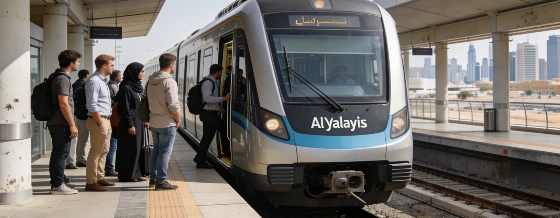
Daily travel between Dubai and Abu Dhabi is about to change. On 30 September 2026, Etihad Rail will open Al Yalayis station, connecting Dubai to Abu Dhabi's Mohammed Bin Zayed City by train in 57 minutes. This will be the first scheduled passenger rail link between the UAE's two largest cities, offering a new alternative to driving and reshaping how people think about commuting, housing, and work across the region. Al Yalayis will be Dubai's first stop on the national passenger network, a step forward in the country's infrastructure plans, as confirmed by The National.
The 57-minute trip is a direct challenge to the car's dominance. For years, driving has been the only real option, but unpredictable traffic and long peak hours have made daily commutes uncertain. The new train gives commuters, students, and families a fixed, reliable way to cross between emirates. Reem Sabouni, a transport expert at Abu Dhabi University, points out that this could make it much easier for people to live in one city and work or study in the other. The project fits with the UAE Vision 2031, which aims for more sustainable transport and closer economic ties between emirates.
Location and connections
Al Yalayis station sits near Jumeirah Golf Estates and close to Sheikh Mohammed Bin Zayed Road, making it accessible to several residential and business areas in South Dubai. Neighbourhoods like Al Furjan, Dubai Investment Park, Green Community, Dubai Production City, Expo City Dubai, and Dubai South are all nearby. The station is about a 30-minute drive from Al Maktoum International Airport, based on usual traffic. Its location supports the Dubai Economic Agenda D33, which focuses on infrastructure-led growth in this fast-developing part of the city.
The station will connect directly to the Dubai Metro's Red Line via a pedestrian bridge to Jumeirah Golf Estates station. This means passengers from Abu Dhabi can switch to the metro without needing a car to finish their journey in Dubai. If the total travel time stays competitive, this link could convince many regular commuters to leave their cars at home. According to a WAM state news agency report, Dubai's transport strategy is built around integrating new rail lines with existing metro and bus networks.
Ticket prices, frequency, and what commuters need to know
Etihad Rail has not yet announced ticket prices or how often trains will run between Dubai and Abu Dhabi. For reference, fares on the Abu Dhabi-Fujairah line start at AED 55 for Comfort Class and AED 120 for Premium Class, with discounts for children and seniors, but these do not apply to the Dubai route yet. The final price and schedule will decide whether the train is mainly for occasional travellers and tourists or becomes a daily option for workers and students. Both Gulf News and The National reported in September 2026 that details on tickets and frequency are still pending.
There is already strong demand. Since the Abu Dhabi-Fujairah phase opened on 30 June, Etihad Rail sold over 70,000 tickets by August, with passengers travelling for work, family, education, and leisure. The current fleet has 13 trains, each carrying up to 400 people at speeds up to 200 km/h. With Dubai joining the network, the potential user base grows sharply, shifting the focus from a niche intercity route to the country's busiest economic corridor. This expansion supports the UAE Ministry of Energy and Infrastructure's goal of improving national connectivity and attracting foreign investment.
Impact on property and neighbourhoods
It is too early to link the new station to specific property price changes, but real estate analysts quoted by The National say better transport in South Dubai could increase interest in areas around Al Yalayis. Ongoing projects like Dubai South, Al Maktoum International Airport, and future metro extensions add to the area's appeal. For employers, a commute under an hour makes it easier to hire from both cities, without worrying about traffic. A Bloomberg analysis notes that infrastructure projects like Etihad Rail are important drivers of long-term real estate demand and value.
For residents, the calculation changes: the distance to work is measured in reliable travel time, not kilometres. If the train keeps its 57-minute promise, some people may rethink where they live, and companies may adjust their hiring. Still, much depends on ticket prices, train frequency, and how well the stations connect to other transport.
What's next for Etihad Rail and Dubai's network?
Al Yalayis is just the start. On the same day, Al Dhaid station in Sharjah will also open. More stations in Madinat Zayed and Liwa are set for 30 November, with the rest of the Al Dhafra stations following on 30 December. By March 2027, Sharjah's University City station is expected to join the network. The national rail system will eventually cover about 900 kilometres, linking major cities and economic centres across the Emirates. Dubai is also expected to get more stations in the future, including stops for both the national rail and a planned high-speed line, as reported by Arabian Business and What's On.
It is worth noting that the current Etihad Rail passenger service is separate from the planned high-speed rail project between Abu Dhabi and Dubai. The high-speed line, still in planning, aims to cut the journey to about 30 minutes with trains reaching 350 km/h, but no launch date has been set. Etihad Rail estimates the high-speed project could add AED 145 billion to the UAE's GDP over 50 years, supporting the Central Bank's forecasts for continued economic growth and diversification.
As Dubai gets ready for this new phase in transport, the city's property market, job scene, and daily routines are likely to shift. The real test will come once the trains start running: will commuters use the new option, and will businesses and families change their habits? The answers will show whether 30 September is just another station opening or the start of a new way for Dubai and Abu Dhabi to connect. For more on how travel options are changing for Dubai residents, see our recent coverage of digital travel platforms.