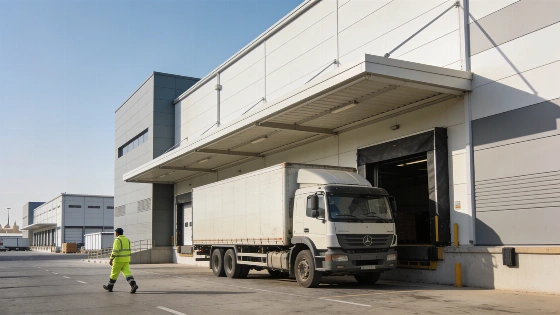
Warehouse rents in Dubai have climbed to new highs. The market brought in 1.8 billion dirhams-about 490 million dollars-in rental value during the first half of 2026. That's a 10 percent jump from the same time last year, according to property consultancy Cavendish Maxwell and Reuters. This strong showing fits with the Dubai Economic Agenda D33, which aims for steady growth and more variety in logistics and trade.
The biggest change isn't just in the numbers. It's in how tenants are acting. Renewals shot up 22 percent year on year, hitting a record for any six-month stretch. Out of roughly 10,000 warehouse lease contracts signed from January to June, about 8,200 were renewals. New leases, on the other hand, dropped by more than half compared to last year. EnterpriseAM backs up this trend. Companies are pulling back on expansion and focusing on keeping costs down.
Small warehouse spaces now drive Dubai's logistics property market. About 70 percent of all contracts in the first half of 2026 were for units under 5,000 square feet. More than half of those were for spaces between 2,000 and 5,000 square feet. Larger warehouses over 10,000 square feet still made up 20 percent of deals. Mid-sized units between 5,000 and 10,000 square feet lagged at just 12 percent. This move toward smaller, flexible spaces matches the UAE's push to support SMEs and nimble supply chains, as seen in recent Emirates News Agency (WAM) coverage of logistics reforms.
Rents have jumped 12.5 percent on average over the past year. Every area tracked by Cavendish Maxwell saw increases. Jebel Ali led with a 15.5 percent rise. Dubai Industrial City followed at 15 percent, and Ras Al Khor was just under 14 percent. But the pace is starting to slow. Some areas only saw small quarterly gains or even slight drops. EnterpriseAM points to a lack of suitable space and new rules from the Dubai Land Department and free zone authorities as reasons for this cooling.
Vidhy Shah, who heads commercial valuation at Cavendish Maxwell, links the record renewals and sharp fall in new leases to a more cautious mood. Tenants are staying put instead of taking on new or bigger spaces. They're wary of rising costs and market uncertainty. Shah expects this pattern to stick. Well-located warehouses will stay in demand, but companies will take longer to decide on expanding. The Central Bank of the UAE (CBUAE) also noted in its latest financial stability review that commercial real estate is entering a phase of "selective growth." Risk management and cost control are now top priorities for tenants.
The total number of warehouse lease contracts dropped by 4.5 percent compared to the first half of 2025. This shows the shift from expansion to consolidation. Tenants are putting cost control and flexibility ahead of aggressive growth. This lines up with the UAE government's wider economic reforms, which push for careful investment and steady development in logistics and industry.
Dubai's commercial property market is seeing the same cautious approach in other areas. An earlier report on hotel occupancy showed similar trends. Dubai keeps drawing foreign investment and building strong infrastructure, helped by the Dubai Media Office and the Ministry of Economy. This keeps the city at the center of regional logistics.
What stands out in the warehouse market is how smaller units now dominate, and tenants are willing to pay higher rents to renew rather than risk moving. Landlords with well-placed, efficient properties have the upper hand. Tenants are watching every dirham. The numbers show Dubai's logistics property market is maturing. Agility and location matter more than ever, and the days of easy expansion are giving way to careful, strategic moves.