
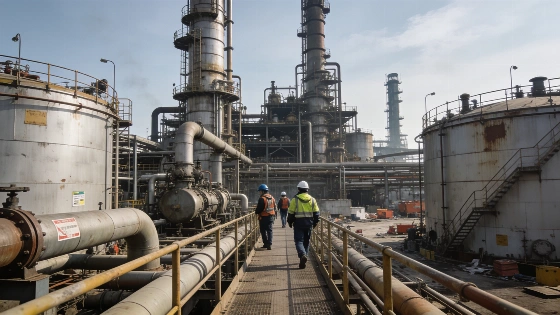
Refineries around the world are shutting down for maintenance right as inventories hit new lows. Supplies from the Middle East and Russia remain shaky. This mix is pushing diesel and oil product markets to a breaking point. Winter demand is almost here. The International Energy Agency (IEA) says global refinery throughput in August 2026 was just 81.4 million barrels per day. That's 4.2 million barrels less than a year ago. The biggest drops came from the Middle East, Russia, and parts of Asia, according to Reuters.
This year, refineries can't put off repairs. They have to slow or stop operations for maintenance, even though the system is already stretched. The IEA reports global oil inventories fell by 95 million barrels in August 2026. Since February, the total draw is 507 million barrels. Market analysts say the refining system is now "stretched to the limit." There's almost no buffer left. That means any new shock could hit hard. The Emirates News Agency (WAM) has covered how this is now a top energy security concern in the region.
Maintenance timing and market vulnerability
Refineries usually plan big repairs in autumn and spring. They try to avoid the rush of summer gasoline and winter heating demand. Not this year. Autumn maintenance is landing when safety margins are razor-thin. Dr. Wafaa Ali, an energy markets expert, says the September to November window is the industry's balancing act. Weather is mild. Demand dips a bit. But delaying maintenance would only push bigger risks onto everyone. She puts it plainly: "Margins for diesel have reached $100 per barrel, yet refineries need a breather to avoid breakdowns, especially as US plants are running at 96.8% capacity."
The diesel market is under the most strain. The IEA found that combined net diesel and gasoil exports from the Gulf and Russia in August were down 1.6 million barrels per day from February. These regions once made up 45% of global seaborne trade in these fuels. Refined-product and LPG exports from Gulf countries in August 2026 were nearly 60% below February levels. That's about 3.7 million barrels per day less than before the crisis. Net diesel and gasoil exports from the Gulf averaged just 390,000 barrels per day in August. That's barely a quarter of pre-war levels, as Reuters and The National confirm.
US distillate stocks are set to drop below 100 million barrels. They'll likely stay under the five-year minimum through most of 2027, according to the US Energy Information Administration. In September, US diesel inventories hit their lowest seasonal level since 1982. European stocks in the Amsterdam-Rotterdam-Antwerp hub were 16% below the five-year average in July. The UAE's energy sector is watching closely. The Central Bank of the UAE (CBUAE) tracks these numbers for inflation risks and supply chain threats.
Compounding factors and government interventions
Three things are hitting at once between October and November. The harvest is driving up diesel use. Heating fuel demand is starting to climb. Maintenance is cutting refinery output. S&P Global Energy calls this a critical stress point. Dr. Wafaa Ali explains that refineries try to stagger maintenance to avoid all shutting down at once. Still, government moves are making things harder. Reuters reports Chinese refiners have stopped oil product exports in October, except to Hong Kong and Macau. They're keeping fuel at home. In the US, talk of restricting diesel exports is making import-dependent markets nervous. American supplies have become crucial as Russian and Middle Eastern flows shrink.
Maintenance is routine. But this year, it's colliding with low stocks and partial outages in Russia and the Middle East. Fuel markets are now hypersensitive to any new problem. Russia has extended diesel-export restrictions through October 2026, according to Argus Media. That move has squeezed global diesel even more and kept refining margins high. The IEA says these changes have tightened refined product markets, especially diesel. Other regions' refineries are running harder to fill the gap. The global system is running flat out. Inventory buffers are almost gone. Meeting demand for diesel, gasoline, and jet fuel is now a real struggle.
Other sectors are feeling the squeeze too. A recent report shows how rising costs are hitting developers and changing market dynamics. The Dubai Economic Agenda D33 and UAE Vision 2031 keep energy security and supply chain resilience at the top of the agenda. The Dubai Media Office keeps the public updated on new infrastructure investments and regulatory changes.
Right now, refinery downtime, low stocks, and government actions have created a perfect storm. Winter is coming fast. The margin for error is almost gone. The facts are clear. If supply chains don't stabilize and inventories don't recover, even small disruptions could spark big price swings and shortages. The refining sector faces a tough test. It must handle maintenance without tipping the market into crisis. For more on UAE energy policy and market moves, check WAM state news agency and Reuters global energy coverage.