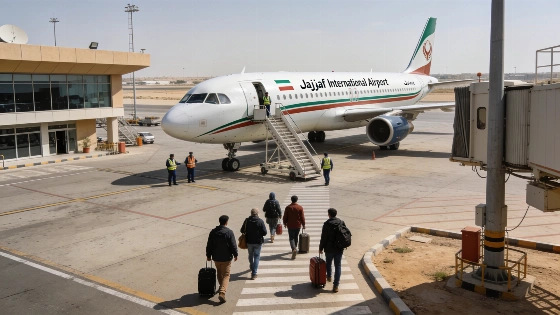
Flights between Iran and Iraq are moving again. Iraqi authorities have given Iranian airlines the green light for up to forty flights a day in and out of Najaf International Airport. This ends a week of grounded planes after US sanctions forced a freeze. The Prime Minister's office confirmed the decision. Reuters also reported the news. Mahan Air is still out. The US blacklist on that carrier remains in place.
Thousands of travelers were stuck during the halt. Many were religious pilgrims or people needing medical care. Najaf draws Shia visitors from Iran year-round. The Emirates News Agency (WAM) has tracked similar travel disruptions across the Gulf. Changing sanctions rules have hit both religious and medical tourism hard.
US waiver and Iraqi push
Earlier this week, The National and Reuters reported that the US Treasury would grant a one-month waiver. The exemption covers flights for religious, medical, and educational reasons. Iraqi officials pushed hard for this. They wanted to restore travel without breaking sanctions. The Prime Minister's office called the US response "positive" and thanked American officials for helping restart flights. But there are limits.
Mahan Air is still banned. The US accuses the airline of moving Iranian Revolutionary Guard Corps members, weapons, and drones. Iraq will not let Mahan Air use its airspace. This is a targeted ban. Other Iranian carriers can fly, but not all. The UAE's General Civil Aviation Authority has taken a similar approach. It stresses the need to follow international aviation security rules across the region.
Impact on religious travel and policy
Flights are back. That will ease the pressure on religious and medical travel between Iran and Iraq. Najaf International Airport is a major hub for Shia pilgrims. Iranian visitors will return, but Mahan Air stays grounded. Not every airline gets the same treatment. Regional aviation analysts told Reuters that selective permissions like this are now common. Governments are trying to balance humanitarian needs with security worries.
Iraqi officials are walking a tightrope. They need to follow US sanctions but also keep cross-border ties alive. The move fits with recent diplomatic steps in the region. Iran has floated new proposals for talks and de-escalation, as reported earlier. In the Gulf, the UAE's Vision 2031 and Dubai Economic Agenda D33 both stress the need for strong travel links and flexible rules. The Dubai Media Office often points to the value of open travel corridors for both the economy and society.
Iraq got a temporary US waiver. It reopened its skies, but only for some. Mahan Air is still out. That sends a message. Humanitarian and religious travel matter, but security comes first. For now, this is a practical fix to a tough problem. The bigger struggle between sanctions and regional travel is not over.