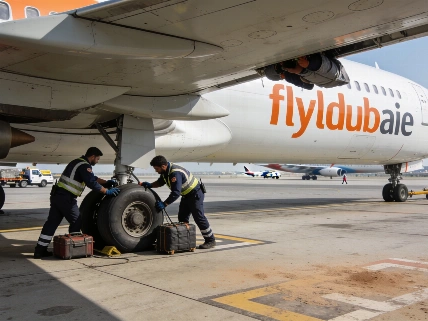
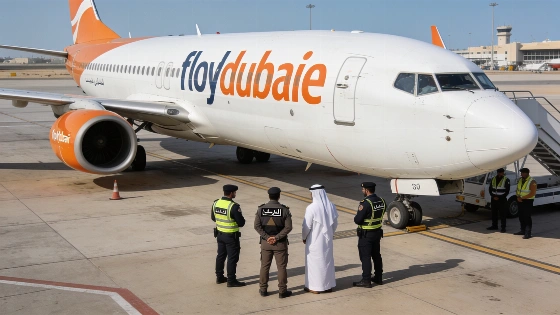
Flydubai flight FZ1073 was headed from Dubai to Tel Aviv. It never made it. The plane, with more than 170 people on board, was forced to land in Tabuk, Saudi Arabia. The reason: an incident broke out in the cockpit while the jet was flying over Jordanian airspace. That detail comes from Reuters and official airline statements.
The landing itself was only the start. The real fight is over who gets to investigate and prosecute any crime that happened on board. The aircraft is registered in the United Arab Emirates. UAE officials moved fast. They said their Public Prosecution would take charge. Their argument: UAE law covers crimes on UAE-registered planes, no matter where the plane is at the time. The UAE Ministry of Foreign Affairs said the Attorney-General had already assigned a special team to the case. Emirates News Agency (WAM) reported that the UAE wants to keep its legal process clear and in line with international aviation rules.
International law and the Tokyo Convention
The Tokyo Convention of 1963 sets the main rule here. The country where the plane is registered usually has the first right to handle crimes on board. There are exceptions. If a crime affects another country, involves its citizens, or threatens its security, that country can step in. But these exceptions are narrow. Landing in another country does not automatically give that country the right to prosecute. The UAE's stance is backed by its own strict aviation rules. These rules have been shaped by the Dubai Economic Agenda D33 and the UAE Vision 2031. Both focus on legal certainty and working with other countries in aviation.
Saudi Arabia signed the Tokyo Convention but not the Montreal Protocol of 2014. The Montreal Protocol would give more countries the right to claim jurisdiction, including the country where the plane lands and the operator's home country. But Saudi Arabia is not bound by that newer treaty. That matters. For this flydubai case, the UAE's claim to jurisdiction stands strong under the current agreements. The Saudi Press Agency said Saudi officials handled the emergency and allowed the plane to land at Prince Sultan bin Abdulaziz International Airport. All passengers and crew were kept safe.
Landing in Saudi Arabia does not automatically shift jurisdiction
Saudi authorities took care of the landing and made sure everyone was safe. They also secured the plane and any evidence. But landing in Tabuk does not mean Saudi Arabia gets to prosecute. The difference between helping in an emergency and having legal authority is key. Saudi officials can help on the ground. The right to prosecute stays with the UAE unless the Tokyo Convention's exceptions apply. This fits with the UAE's wider approach to regulation. The Dubai Financial Services Authority (DFSA) and Abu Dhabi Global Market (ADGM) both stress cross-border legal cooperation and protecting investors.
The legal picture could change if the incident is later seen as an act covered by the Beijing Convention of 2010. That treaty deals with unlawful acts against civil aviation. If the facts fit, the rules change. For now, the investigation is still open. Flydubai says it is working with all authorities. The airline sent a replacement plane to keep passengers moving. That's standard practice. The UAE wants to keep its reputation as a global aviation hub.
Multiple jurisdictions and the need for international cooperation
Many people think only one country can claim jurisdiction in these cases. That is not true. International aviation law allows more than one country to have a legal claim, depending on the treaties and the facts. But that does not mean there will be two prosecutions. Countries need to cooperate, share evidence, and work together to avoid confusion or gaps. The National has pointed out how important this is as the UAE's role in global aviation grows and its partnerships in the Gulf deepen.
This is not just an aviation issue. Similar legal puzzles have come up in other transport sectors. For example, earlier reports on rail links between Dubai and Abu Dhabi show how operational and legal boundaries can get complicated fast.
The flydubai case shows what happens when international law, national borders, and real-world emergencies collide at 30,000 feet. The UAE's quick move to claim jurisdiction is not just paperwork. It is needed to keep things clear and avoid legal limbo. The outcome will matter. It could set the rules for how Gulf states and their partners handle similar incidents in the future. For now, aircraft registration remains the main factor in deciding who has legal authority-unless new treaties change the rules.