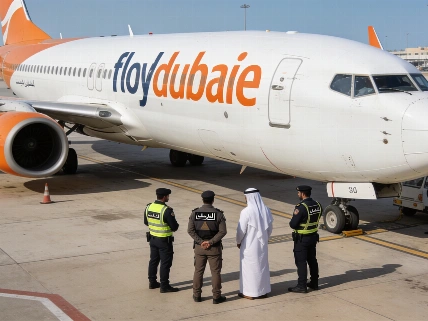
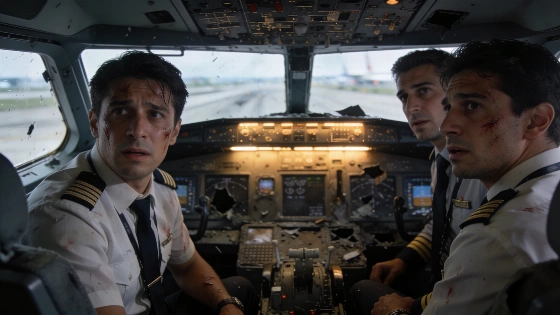
Chaos broke out midair on a Flydubai Boeing 737 Max. The co-pilot turned on his captain. The cockpit became a battleground. The plane, packed with 174 people, was flying from Dubai to Tel Aviv. Suddenly, it plunged. The descent hit more than 32,000 feet per minute. That's a rate only fighter pilots or astronauts usually face. The Saudi Ministry of Interior said all passengers got help right after landing. Both pilots ended up in a local hospital.
This was no technical glitch. It was a human attack. The co-pilot assaulted the captain. The cockpit spiraled into chaos. The plane pitched hard. Passengers rushed forward. They fought to restrain the attacker. Off-duty pilots on board jumped in. They took over and steered the battered jet to a rough landing in Tabuk, Saudi Arabia. The UAE Prosecutor General called it an attempted terrorist act. The investigation is still underway. Motives will be announced after official procedures finish, according to Reuters.
Aircraft design and survival under extreme stress
The Boeing 737 Max took a beating. Its survival is under the microscope. FlightRadar24 data shows the jet briefly hit 690 miles per hour. That's close to the speed of sound at cruising altitude. The 737 Max 8 is only rated for 630 miles per hour. Unverified photos online show part of the rudder ripped away. That's a critical control surface. Saudi authorities, with UAE security teams, confirmed the co-pilot was detained after the attack. Al Jazeera and other top outlets reported these details.
Bob Stoney, a former FAA test pilot, knows these planes. He oversaw certification for several Boeing models, including the 737-900ER. He explained that certification tests push planes far past normal limits. They simulate rudder failures and stuck controls. But they don't test for a total loss of the rudder. Stoney said landing a 737 without a rudder is tough, especially in crosswinds. Losing other control surfaces could be even worse.
Human intervention and the anatomy of a rescue
Eyewitnesses say the captain, stabbed and bleeding, managed to open the cockpit door. He called for help. Passengers and off-duty pilots rushed in. They overpowered the attacker. They got the plane back under control. One passenger, Yaniv Hayun, said he remembered tips from watching "Air Crash Investigation" on National Geographic. That gave him the nerve to pull back on the yoke and stop the dive. The 737's dual-yoke setup, unlike the Airbus A320's side-stick, made it easier for non-pilots to help. Two extra reserve pilots were on board. BBC News confirmed their presence. Their quick action made the landing possible.
After landing, the damage was clear. The rudder was visibly torn. The forces inside the cabin were brutal. Passengers felt G-forces few civilians ever experience. Investigators are now looking at both the human and technical reasons the plane survived. The Emirates News Agency (WAM) reported that UAE and Saudi officials worked together fast. They helped passengers and managed the aftermath.
Engineering, luck and the thin line between disaster and survival
The 737 Max's backup systems helped. But luck played a part. The jet held together under stress that would break most planes. That's thanks to tough certification rules. Tests push wings to breaking points. Flights go faster than normal to check limits. Still, as the 2009 "Miracle on the Hudson" showed, survival often comes down to a lucky chain of events. Crew experience, quick rescue, and strong design all matter.
For Flydubai, Boeing, and the whole industry, this is a wake-up call. No system can fully control human behavior. Passengers and off-duty crew stepped up. The plane's design took the punishment. Now, cockpit security and crew training are under review. The Dubai Civil Aviation Authority and the UAE General Civil Aviation Authority (GCAA) are expected to look at new cockpit security rules. This fits with the Dubai Economic Agenda D33 and UAE Vision 2031, both aiming for top safety standards as aviation grows. As reported earlier, the legal fallout can be as tangled as the emergency itself. In the end, this Flydubai flight survived because of human courage, tough engineering, and pure chance. That's never guaranteed. Not in the sky.