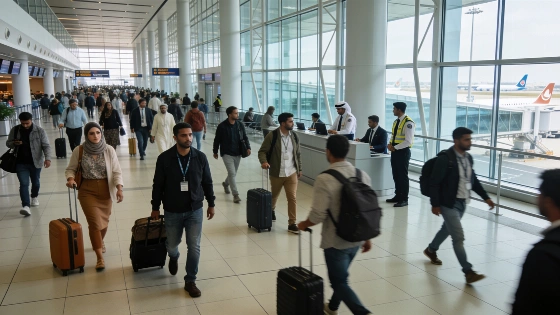
In October 2026, Dubai International Airport moved past the world's busiest hubs. It took the top spot for international seat capacity. The airport logged 4.56 million international seats. That's more than London Heathrow and Seoul Incheon. OAG, a travel and aviation analytics firm, released the numbers. Emirates News Agency (WAM) called it a milestone for the UAE's aviation sector. Dubai's position as a global gateway just got stronger.
The numbers tell the story. International seat capacity at Dubai International jumped 5.3% from September. That's nearly 230,000 extra seats in one month. Demand for travel through Dubai keeps rising. The airport has shown it can scale up fast. Interim figures show Dubai International handled 31.5 million passengers in the first half of 2026. Monthly traffic climbed from 3.5 million in April to 5 million in June. The momentum is clear, as reported by Al Khaleej business coverage.
Dubai's location and airline reach
Dubai sits at the crossroads of Europe, Asia, Africa, and the Middle East. That's always been its edge. The airport's reach is backed by a huge network of international routes. Emirates and flydubai anchor this network. They connect Dubai to dozens of cities. For many travelers, Dubai is the best place to change planes. The Dubai Media Office has pushed for more aviation growth. The Dubai Economic Agenda D33 calls for bigger infrastructure and more global links. The goal is clear: keep Dubai at the center of world travel and business.
OAG's October ranking puts Dubai International ahead of London Heathrow, which had 4.12 million international seats. Seoul Incheon followed with 3.94 million. Amsterdam and Singapore Changi round out the top five. Istanbul, Paris Charles de Gaulle, Hong Kong, Frankfurt, and Bangkok Suvarnabhumi fill out the rest of the top ten. But if you count both domestic and international seats, Atlanta's Hartsfield-Jackson International Airport leads with 5.44 million. Chicago O'Hare and Tokyo Haneda come next. Dubai's strength is clear. It's all about international traffic, not domestic.
What this means for Dubai's economy
Dubai International's growth is more than an airport story. It's a direct boost to the city's economy. The airport brings in travelers and business. It supports tourism, hotels, trade, logistics, and business services. This flow of people and goods is a big reason Dubai draws investors. It fits with the UAE Vision 2031 and the Central Bank of the UAE's (CBUAE) outlook for non-oil growth.
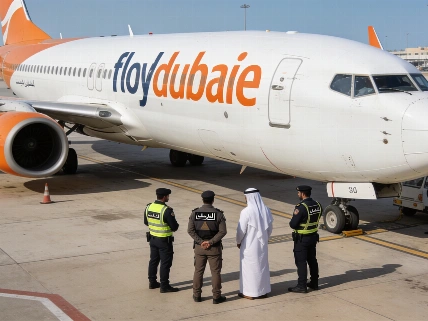
The airport's performance shapes Dubai's wider economy. Industry watchers track every move. The recent developments with flydubai's international flights show how complex global air travel can be from Dubai. After a flydubai flight to Tel Aviv was diverted, the UAE Ministry of Foreign Affairs said officials are watching the case closely. An investigation is underway, according to government statements and The National.
Dubai International Airport's lead in international seat capacity shows the emirate's focus and speed. The numbers don't lie. Dubai is not just keeping up with the world's biggest airports. It's setting the pace. For travelers, companies, and investors, Dubai stays the main gateway between East and West. Its aviation sector is set to drive growth for years ahead.