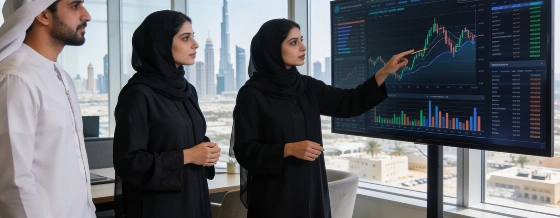
Dubai's virtual assets market has changed quickly in just a few years. What started as a space for crypto startups now draws in banks, pension funds, and family offices-groups that once kept their distance. The main reason is regulation. Trading volumes under the Dubai Virtual Assets Regulatory Authority (VARA) are expected to reach AED 2.5 trillion in 2025, a sign that this sector is no longer a niche experiment. Emirates News Agency (WAM) links this growth to the Dubai Economic Agenda D33, which aims to make the city one of the world's top financial centers by 2033.
Fatima Al Jasmi, co-head of licensing and supervision at VARA, points to regulatory clarity as the turning point. "Regulatory clarity reduces uncertainty and gives companies greater confidence to invest and plan long-term," she told Arabian Business. VARA was set up as an independent body to provide a clear, predictable path to licensing and oversight. By 2026, public reviews and independent analyses show that VARA has issued 89 authorizations, with 64 entities fully licensed outside the DIFC. More than 50 virtual asset service providers now hold licenses, and others are working through the process. VARA licensing data
Institutional capital changes the rules
The arrival of major financial institutions marks a real shift. Al Jasmi says that in the past two years, the market's makeup has changed, with banks, pension funds, family offices, exchanges, and custodians now active. This brings in larger capital and more complex products, but also raises the bar for risk management and compliance. The Central Bank of the UAE (CBUAE) has stressed the need for strong anti-money laundering standards and cross-sector supervision to keep the market safe, as reported by WAM.
VARA's teams focus on making sure growth is built on solid ground. Good governance, risk controls, and anti-money laundering standards are required for anyone entering the market. Dubai's approach is to measure whether the market can handle bigger capital flows without losing oversight. VARA's licensing framework requires separate licenses for each activity-exchange, broker-dealer, custody, transfer and settlement, lending and borrowing, management and investment, and advisory-so each operator meets the right compliance standards.
For smaller startups, the main question is whether they can afford compliance costs. Al Jasmi says requirements depend on the type of activity and risk, not just company size. Startups can join through pilot programs and limited licenses, letting them test ideas and grow gradually without taking on the full compliance load from the start. As companies expand and their activities get more complex, regulatory demands increase. This tiered approach is meant to support innovation while keeping the system stable, a point made in Dubai Media Office updates on the city's digital economy plans.
Tokenised real estate and new asset classes
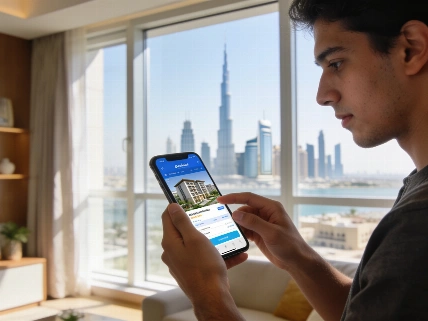
The next stage for Dubai's virtual assets market goes beyond cryptocurrencies. Real estate is leading the way in tokenisation, with the Dubai Land Department predicting a tokenised property market worth AED 60 billion by 2033. In May 2025, PRYPCO Mint launched as the first platform under the Land Department's tokenisation push, and PRYPCO FZE received a VARA broker-dealer license for real estate tokenisation. Secondary trading of tokenised real estate began in February 2026, making fractional ownership possible and lowering the entry bar for individual investors, as noted by Coinpaprika's review of Dubai's legal framework for tokenised assets.
Property is just the start. VARA and the Dubai Multi Commodities Centre are working on frameworks for tokenising commodities, including pilot programs for gold and diamonds. Investment funds and credit products are also moving in this direction. The key is legal clarity-tokenisation only works if the link between digital tokens and real-world ownership is enforceable. Legal infrastructure now matters as much as technical innovation, as Bloomberg's coverage of the UAE's digital asset reforms points out.
Trust and risk in a growing market
As the market grows, so do the risks. Al Jasmi sees weak trust as the main threat, whether from poor governance, weak operations, or lack of client asset protection. Unlicensed operators and misleading marketing add to the risks. VARA has tightened promotion rules and acts against those operating outside the rules. The Dubai Financial Services Authority (DFSA) and Abu Dhabi Global Market (ADGM) have also issued joint statements calling for unified standards to protect investors and keep confidence high.
Some risks are global. Different rules across countries make things harder for firms working in several markets, especially around licensing, fund flows, and compliance. Al Jasmi calls for more cross-border cooperation, saying no single regulator can solve these problems alone. The UAE's work with international standard-setters, as reported by The National, is seen as a model for other countries trying to balance innovation and investor protection.
Regulation as a competitive advantage
In a fast-changing sector, regulation is often seen as a hurdle. In Dubai, it has become a draw. Al Jasmi says a dedicated regulator and published rulebook give companies stability and the ability to plan-qualities that matter more as investment grows. Dubai's infrastructure, global connections, free zones, 100% foreign ownership in many cases, quick business setup, favorable tax rules, and access to capital and talent all add to this advantage.
The city's growing network of virtual asset and Web3 companies shows how the ecosystem is developing. As Dubai Municipality reported, the city's changes go beyond finance-public spaces and infrastructure are also adapting to new economic needs.
Jobs and the digital economy
The move from crypto startups to a broader digital financial system is changing the job market. Al Jasmi expects more demand for people with financial, regulatory, and technical skills, especially in compliance, smart contract auditing, cybersecurity, and custody engineering. Dubai's digital economy is expected to create over 10,000 specialist jobs each year, with Al Jasmi hoping many will go to young Emirati women. Her work with the "Tomorrow's Regulatory Leaders" program has shown the need to build national talent pipelines.
With VARA-regulated trading volumes set to reach AED 2.5 trillion, Dubai's virtual assets sector is no longer about proving the market exists. The challenge now is to balance the arrival of institutional capital with space for startups, while expanding tokenisation to real estate, gold, diamonds, funds, and credit. In this environment, Dubai's regulatory framework is more than just a set of rules-it is what draws global players. The city now offers a market where companies can experiment and grow, but always within clear boundaries that protect investors and clients. This is the new reality for virtual assets in Dubai, and one that will be hard for other markets to match.