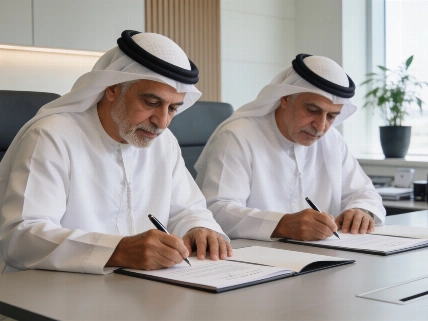
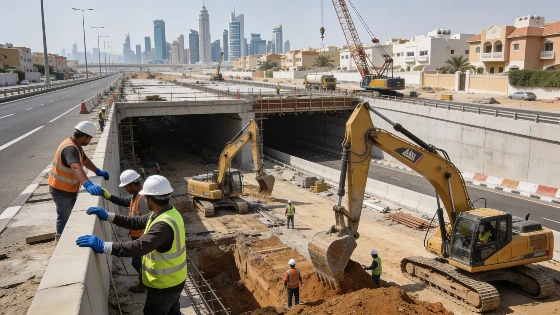
Construction crews will soon break ground on one of Dubai's biggest road projects in years. The Roads and Transport Authority (RTA) has signed a contract worth over AED 1.5 billion to rebuild Latifa bint Hamdan Street. Larsen & Toubro (L&T), a major Indian contractor, will handle the work. This deal sets the stage for faster commutes and stronger links across the city. Recent industry reports and RTA statements confirm the project's scope.
The new corridor will stretch 12 kilometres. It will connect Sheikh Zayed Road, Al Khail Road, Meydan Road, Sheikh Mohammed bin Zayed Road, Sheikh Zayed bin Hamdan Al Nahyan Street, and Emirates Road. By 2028, Dubai expects a fully linked route. This road will carry east-west traffic across the city. The plan fits into the Dubai Economic Agenda D33, which puts top-tier infrastructure at the heart of growth and global competition. The Dubai Media Office has highlighted this priority.
Major infrastructure overhaul and traffic relief
Seven new bridges will span 2.3 kilometres. Eight tunnels will cover another 900 metres. These upgrades will let the corridor handle up to 16,000 vehicles per hour in both directions. Daily trips could top 130,000. The RTA says the drive from Umm Al Sheif Street to Emirates Road will drop from 33 minutes to just 15. That's a 54 percent cut. WAM state news agency reports that these changes are key for keeping up with Dubai's fast-growing population and rising travel needs.
The project is about more than speed. The new corridor will add 12 percent more capacity for east-west routes. About 650,000 people in areas like Nad Al Sheba, Al Barari, Dubai Hills, District One, Mohammed Bin Rashid Gardens, Legends, Majan, and Global Village will see direct benefits. The work also covers homes, businesses, and factories along Latifa and Meydan Streets, plus the land between Al Khail and Emirates Roads. The contracts come in two main packages. One covers a new road between Al Khail Road and the Latifa bint Hamdan Street extension. The other includes a big interchange at Al Meydan Street, with new bridges, tunnels, and support systems.
Integrated cycling and development access
The plan isn't just for cars. It adds 12.5 kilometres of new cycling tracks. These will link the current network from Al Qudra to Jumeirah. Dubai wants to be one of the world's top cities for cyclists. The new interchange will help current and future developments in the area. That means smoother access and a boost for local projects.
Mattar Al Tayer, Director General and Chairman of the RTA board, says this is part of a bigger push. The goal is to support Dubai's busiest roads, like Al Khail Road, Dubai-Al Ain Road, Umm Suqeim Street, and Sheikh Mohammed bin Zayed Road. The city wants better entry and exit points for big developments. It also wants to make the whole road network work better. The contract with L&T's transport division, as reported by The Economic Times, shows Dubai is bringing in global expertise for its biggest projects.
Dubai has been modernising its infrastructure for years. As reported earlier, the city has already unified data for hundreds of thousands of public assets. This points to a joined-up approach to growth and mobility.
The Latifa bint Hamdan Street overhaul shows Dubai is aiming high. The city is spending big on bridges, tunnels, and new ways to get around. The RTA wants to cut journey times and help new developments. This is a practical, forward-looking plan for urban travel. Other cities in the region are watching. Dubai is moving fast.