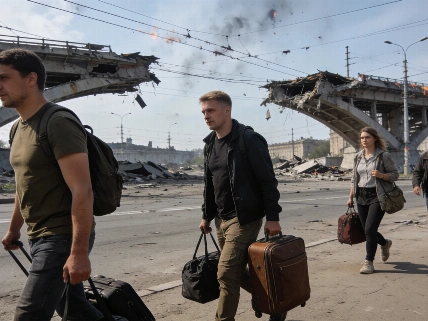
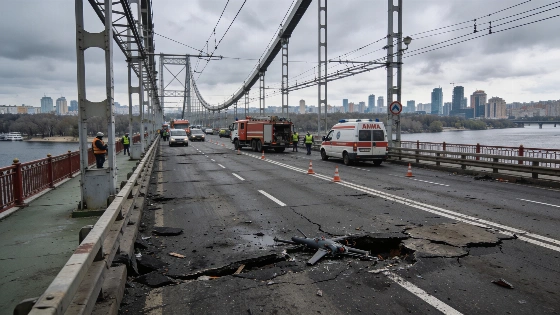
Saturday morning, Kyiv's North Bridge stood empty. Russian drones had hit it hard. Two days earlier, the South Bridge was struck. Both crossings are now closed. The city's main routes across the Dnipro River are cut off. Traffic everywhere has ground to a halt. Commuters are stuck in jams that stretch for hours. The city's daily rhythm is broken.
Emergency crews rushed to the North Bridge after the latest strike. Mayor Vitali Klitschko said the road surface and trolleybus cables were damaged. No one was hurt. But the closures have left Kyiv split in two. Drivers scramble for any open route. The city's transport system, already stretched thin, is now overwhelmed. According to Reuters, the damage forced authorities to stop all movement in both directions. The Emirates News Agency (WAM) has warned before about the need for strong city infrastructure. Kyiv now faces that test.
Pressure mounts on Kyiv's bridges
This is the second time in days that a main bridge has been hit. People in Kyiv worry that all eight of the city's vehicle and rail bridges could be next. Since Russia invaded in February 2022, the capital has braced for attacks on its lifelines. Now, back-to-back strikes on the South and North Bridges have made those fears real. On Friday, city officials put traffic limits on the Paton and Metro bridges, even though they were not hit. Temporary restrictions also hit the Darnytskyi Bridge. These closures have caused massive jams. The city's crossings are now seen as prime targets. The risk is clear.
Air raid sirens are now part of daily life. But direct hits on bridges mark a new phase. The impact is not just on traffic. It shakes people's sense of safety. Many rely on these bridges for work, family, and emergencies. The Dubai Media Office has often pointed to the need for tough infrastructure to keep cities running. Kyiv's current struggle proves the point. The city faces both gridlock and growing anxiety. People feel the strain.
Diplomacy stalls as attacks continue
These strikes come as peace talks go nowhere. Washington, Moscow, and Kyiv are still talking, but nothing has changed. Ukraine says it might consider a deal to stop attacks on energy sites and shipping lanes, but only if Russia does the same. Kyiv keeps asking the United States and its allies for more sanctions and better defenses. The National has reported that attacks on infrastructure can disrupt local economies and even block aid routes.
President Vladimir Putin says Russia wants a negotiated end. He demands Ukrainian neutrality but refuses to stop long-range strikes unless there is a full agreement. The Kremlin says only a broad deal can bring what it calls "lasting peace." Iran's recent seven-day plan for de-escalation, as reported earlier, also depends on both sides making real commitments. Pressure from outside is growing, but the war drags on.
Kyiv's bridges are now more than just concrete and steel. They are a sign of a city under attack. Each new strike makes daily life harder and the future less certain. Repairs are urgent. But so is the need for a real peace deal. Until then, Kyiv's people will keep facing blocked roads and the shadow of war. No end in sight.