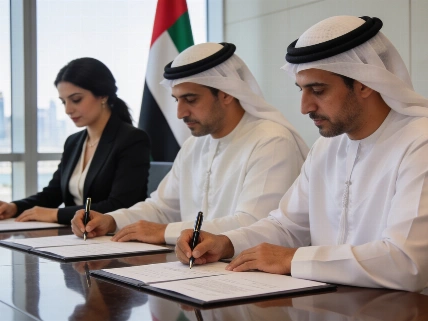
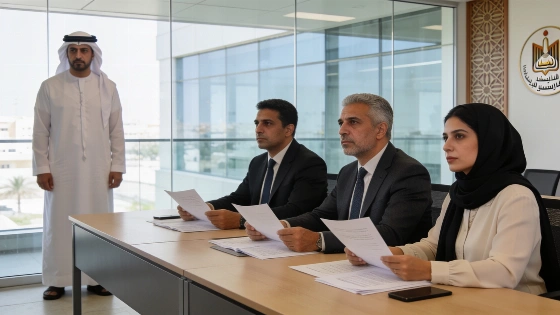
Four new Cabinet decisions are about to change how Dubai's universities and training centres work. The Ministry of Higher Education and Scientific Research (MoHESR) just wrapped up three major forums. Nearly 500 leaders from higher education, technical and vocational training, and government came together to go through the new rules and what they mean in practice. This was confirmed by Zawya event coverage.
The message from these forums was blunt: loose compliance is over. Institutions now have to follow a new national framework for licensing, fees, financial guarantees, and penalties. These are set out in Cabinet Decisions 104, 92, 103, and 143 of 2026. The last session in Sharjah ended a month of meetings, which also took place in Abu Dhabi and Dubai. The goal was to make sure every institution knows what it must do under the new legal rules. The Ministry says Resolution 104/2026 sets up a "clear and unified licensing pathway" for starting, renewing, changing, or cancelling higher-education licences. Resolution 103/2026 brings in new fees and financial guarantees for many ministry services, including programme accreditation and oversight of scholarship students.
What the new decisions mean for Dubai's education sector
These four Cabinet decisions are not just paperwork. Decision 104/2026 creates a national licensing system for higher education providers. Decision 92/2026 sets new review fees for academic and technical institutions. Decision 103/2026 spells out the financial guarantees and service fees the Ministry now requires. Decision 143/2026 lists violations, penalties, and administrative steps tied to Ministry services. MoHESR says Resolution 103/2026 took effect on 12 September 2026. New fees now apply to new institutions and incoming scholarship students. Existing institutions and current scholarship students will switch to the new fees from the next fiscal year.
For Dubai's universities and training centres, this means real changes in how they run, budget, and report to the authorities. The Ministry's forums broke down each rule in detail. Sector leaders and local education officials were there to explain what needs to be done and how to stay compliant. Dr. Abdulrahman Al Awar, Acting Minister of Higher Education and Scientific Research, called the reforms a key step to prepare graduates for the future workforce and support the UAE's economic goals. The Emirates News Agency (WAM) reports that these reforms are moving forward both nationally and across the GCC, showing the UAE's push for educational quality and its link to the Vision 2031 agenda.
Sector leaders face new compliance expectations
Dr. Ahmed Sultan Al Shaibani, Undersecretary of the Ministry, said that ongoing talks with universities and training providers are now part of the regulatory process. The forums were set up to let institutions ask questions and give feedback, so no one is left in the dark about what is required. This approach is similar to what was reported earlier by Dubai's Roads and Transport Authority, where direct engagement is used to drive change in the sector.
With the new rules, Dubai's higher education sector is expected to move past simple box-ticking. The Ministry's focus on clarity and shared understanding means stricter enforcement, but also support for institutions as they adjust. The real challenge will be how universities and training centres change their internal systems to meet the new standards, especially now that penalties for non-compliance are set and public. The Ministry has also launched an Outcome-Based Evaluation Framework this year, training 735 university staff across 12 workshops. This shows the regulatory push was already underway before these Cabinet decisions.
Dubai's education sector is now under closer regulatory watch. The Ministry's forums made it clear: institutions must act early, be open, and stay in line with national goals. This is more than a routine update. It is a full reset that will shape the quality, competitiveness, and reputation of Dubai's higher education for years. The universities and training centres that adapt fastest will be best placed to succeed under the new rules, in line with the Dubai Economic Agenda D33 and the UAE's aim to attract global talent and investment, as the Dubai Media Office often points out.