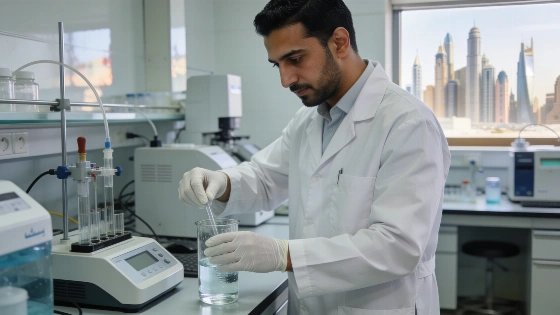
Dubai's main laboratory under the Ports Customs and Free Zone Corporation (PCFC) has boosted its environmental and water testing. In the first six months of 2026, the lab carried out 2,459 tests. That's up from 2,368 tests in the same period last year. The Emirates News Agency (WAM) confirmed the numbers. The increase points to tighter checks and more technical muscle at the lab.
This push comes from a clear goal: keep standards high. Abdullah Mohammed Balhoul, CEO of the Planning and Development Department "Trakhees", said the lab's new protocols are built to match Dubai's plans for a safe and sustainable city. The lab now does more than just routine licensing. It takes an active role in protecting the environment and uses new testing technology. This fits with the Dubai Economic Agenda D33 and the city's wider sustainability plans.
What the new testing covers
The busiest tests in early 2026 were for stack emissions, sewage tank ventilation, swimming pool water, wastewater, and port water quality. The lab also ran marine tests on phytoplankton, zooplankton, and benthic organisms. These checks show how complex Dubai's environmental monitoring has become. WAM reports that all this work is part of a plan to protect public health and marine life.
In total, 334 clients used the lab's services during this time. Out of all tests, 1,566 were regulatory checks to make sure Dubai's environmental rules are followed. These included environmental tests, port water and treated wastewater checks, and general water quality reviews. The heavier regulatory load shows Dubai's push to keep top standards at its ports, free zones, and city infrastructure.
More tests, more technical skill
In 2025, the lab finished 4,385 tests and analyses across 46 specialized types. These included three kinds of environmental tests, nine chemical and metal checks, 19 microbiological tests, six marine analyses, and nine water quality checks. This range shows how the lab's technical reach is growing and how central it is to Dubai's regulatory work. The lab also kept a close eye on marine ecosystems, analyzing 126 phytoplankton, 150 zooplankton, and 114 benthic organism samples. This supports Dubai's focus on marine sustainability.
Dubai is not working alone. Other emirates are also tightening their rules, as reported earlier about Fujairah's investor support moves. But Dubai's lab-led approach stands out. It mixes advanced testing with direct rule enforcement. This matches the UAE Vision 2031 and the country's lead in environmental innovation. The Dubai Media Office has pointed to ongoing investments in lab facilities and digital upgrades to back these goals.
The facts are clear. Dubai is not settling for the minimum. More lab tests, a wider range of checks, and a focus on water and the environment show a city aiming to lead in sustainable growth. For people and businesses in Dubai's ports, free zones, and regulated sites, the message is clear: expect stricter rules, more checks, and a system that values both safety and new ideas. This is more than a technical update. It's a shift in how Dubai handles its environmental future, as shown by regular updates from WAM state news agency and other official UAE sources.