Three new projects are changing how Dubai remembers itself. The city is not letting its history slip away as it grows. Instead, it is building a system to keep its story close, even as the skyline changes fast.
Each project covers a different part of Dubai's memory. One focuses on government records. Another collects the stories of Dubai's rulers. The third gathers the daily lives of residents. This approach fits with the Dubai Economic Agenda D33. That plan calls for growth that keeps culture and identity at its core. Recent Dubai Media Office briefings have stressed this point.
Turning official records into living history
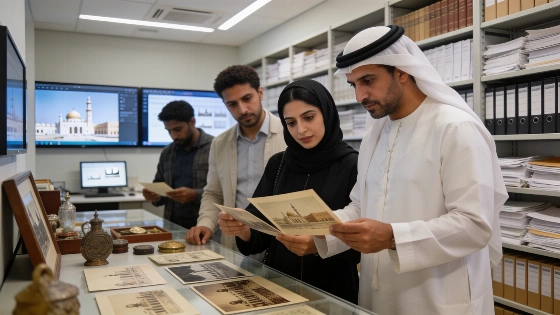
In May 2026, the Mohammed Bin Rashid Library Foundation started the "Dubai Archive" project. Its job is to bring together government, semi-government, and old documents. The goal is to protect the city's official memory. The first phase included five government bodies: Dubai Municipality, Mohammed Bin Rashid Housing Establishment, Islamic Affairs and Charitable Activities Department, Digital Dubai, and Dubai Government Human Resources Department.
This project uses artificial intelligence to sort and find documents. It is not just about speed. The Dubai Archive turns dry files into searchable stories. Now, researchers can see how city services grew and how decisions shaped Dubai's path. The Emirates News Agency (WAM) says this digital push is part of a bigger plan to make government more open and easy to access.
This is a big change. Archiving is no longer just about following rules. It is about understanding how Dubai changed. AI tools help Dubai aim for top status in smart government. The Dubai Digital Authority and the Dubai Financial Services Authority (DFSA) are pushing new rules to support this vision.
Saving the leadership story
Another project, "Dar Al Maktoum", started with Law No. 28 of 2024 and opened in October 2025. This center keeps the history and stories of Dubai's rulers and the Al Maktoum family. It collects documents, artefacts, biographies, and records of the rulers' role in building Dubai and the UAE.
Dar Al Maktoum is more than a vault of papers. It holds photos, letters, personal stories, and research. These items show how the city's leaders shaped Dubai's politics, economy, and culture. The project's launch shows how important it is to keep leadership memory alive. Reuters has called this kind of work a sign of cities that plan for the future.
This archive lets people trace history back to its roots. It links leadership choices to the city's growth. The project also fits with UAE Vision 2031, which puts national heritage at the center for future generations.
Residents' stories come forward
Dubai is not stopping at official records or rulers' stories. The "Dubai Irth" project, launched in February 2025, collects the memories, customs, and daily life of Dubai's people. It looks at how residents lived, worked, and celebrated across generations.
Dubai Irth stands out because it asks people to share their own stories. Families send in their memories. Experts check these stories for their historical and cultural value before adding them to the archive. This way, the community helps write the city's history. In April 2026, the Dubai Heritage project said it would publish 100 books based on these stories. The aim is to make these personal accounts easy to find for researchers everywhere.
Old photos, tales of lost markets, jobs that no longer exist, family traditions, and the daily trip to school or work-these details matter. They show what life was really like at different times. Official records cannot capture everything. The Ministry of Culture and Youth says this kind of work helps people feel they belong and keeps the city's story whole.
In April 2026, Dubai Irth confirmed its plan to print 100 books from residents' stories. These books will sit next to official records. The message is clear. History is made by people, not just by laws and leaders.
Building a layered memory
These three projects do not fight for one version of history. They build layers. The Dubai Archive keeps the official record. Dar Al Maktoum saves the leadership story. Dubai Irth lets the community add its voice.
Dubai changes fast. That puts its past at risk. The Central Bank of the UAE (CBUAE) has said in its economic reviews that cultural projects like these help keep society together as the city grows and changes.
By sorting documents, artefacts, photos, and stories into clear archives, Dubai is not just saving its past. It is giving future generations the tools to see how the city became what it is. In Dubai, the future never stands still. Memory is not a luxury. It is a guide. The city that keeps its records, honors its leaders, and listens to its people is ready for whatever comes next.