
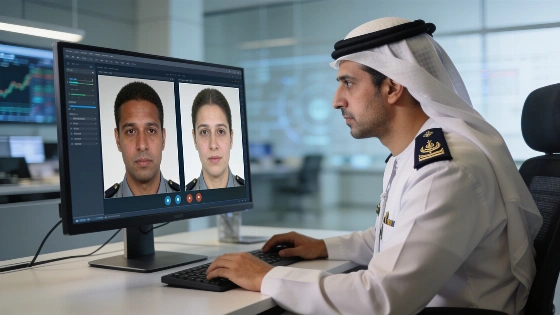
Inside Dubai's cybercrime unit, officers now face a new breed of digital deception. Deepfake technology has reached a point where AI can clone voices and faces with uncanny accuracy, making it nearly impossible for even seasoned investigators to spot a fake on sight.
The Centre for Future Foresight at Dubai Police released a study during Cybersecurity Awareness Month that lays out the scale of the problem. AI-generated media now slips past traditional checks, raising the risk of identity theft and digital fraud. The research, cited by The National, points to a bigger threat: deepfakes are eroding the reliability of digital evidence and shaking confidence in decision-making across finance and government.
Brigadier Dr. Expert Hamdan Al Ghaithi, who heads the Centre, says the real danger isn't just fake content slipping through. The bigger risk is that genuine digital material gets dismissed, simply because synthetic content can now mimic reality so well. That kind of doubt chips away at the foundations of digital communication for businesses and public agencies.
The study makes it clear: the next wave of digital risk isn't about catching forgeries. It's about proving what's real and tracing content back to its source. As AI-generated fakes multiply, the burden shifts. It's no longer enough to claim authenticity-proof is now required. Dubai Police have warned that AI-powered scams are already using fake voices and images to impersonate people, companies, and government offices. The goal is to steal money or confidential data, according to Emirates News Agency (WAM) and Emirates 24/7.
Police are pushing for a more aggressive stance on digital security. Brigadier Al Ghaithi calls for constant monitoring of new tech, early warning systems, and scenario planning to keep pace with evolving threats. Trust in digital information, he says, is now a core part of community safety. These efforts fall under the Ministry of Interior's "Safe UAE Through Your Digital Awareness" campaign, run with the Dubai Electronic Security Center and tied to Cybersecurity Awareness Month, as reported by Gulf News.
Dubai Police put this into practice with an interactive cybercrime awareness platform at Dubai Mall from October 7 to 10, 2026. Thousands of visitors learned how to spot deepfakes, protect children and personal data, and report incidents through the eCrime portal. This hands-on push fits into Dubai's digital transformation drive, which is anchored in the Dubai Economic Agenda D33 and the UAE Vision 2031. Both plans put secure digital infrastructure and public trust at the center of economic growth.
Dubai's warning comes as the city steps up digital safety measures. Authorities have tightened oversight in other areas too, as seen in the reported earlier crackdown on building safety certificate renewals.
The Dubai Media Office and the Central Bank of the UAE have both highlighted digital resilience in recent policy briefings. Both agencies stress the need for cross-sector cooperation to protect the country's digital future.