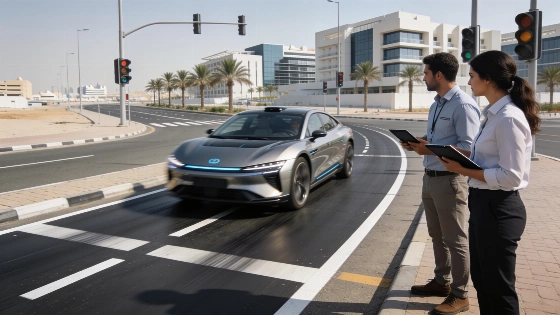
Engineers and regulators gathered in Dubai Silicon Oasis this week. The city's new Dubai Mobility Labs are now open. These grounds are not just another tech park. They are built for one thing: to turn self-driving cars from prototypes into real vehicles on Dubai's streets. The Roads and Transport Authority (RTA) and Dubai Integrated Economic Zones Authority (DIEZ) led the launch. The National covered the event. The government is betting big on future mobility.
Dubai wants 25% of all trips to be autonomous by 2030. That's the target. The new labs are built to help hit that mark. The site runs 248 test scenarios. Some are in closed tracks. Others play out on public roads. Vehicles face every kind of city traffic before they ever carry real passengers. The test zone stretches from Silicon Oasis to Al Qudra. It mixes simulation with real-world driving. Dubai Eye 103.8 and Emirates News Agency (WAM) both confirmed these details.
Inside Dubai's new mobility testbed
The Dubai Mobility Labs use a hands-on approach. There are dedicated tracks and a multi-use area. This zone can run 195 different traffic situations. Of those, 143 are core scenarios. Another 52 were added with new design tweaks. The labs connect straight to public roads for live trials. This setup gives Dubai an edge in transport tech. It fits with the UAE Vision 2031 and the city's push to upgrade infrastructure.
The site has more than just tracks. There are offices, service spaces, and three light industrial units for tech installs. High-capacity electric chargers are ready for use. Global companies and startups can work here. WeRide, Pony.ai, and Tesla have already run trials. They proved the labs are ready for a wide range of new mobility ideas. Gulf News reports that companies, developers, and research teams can use the labs to develop, test, and certify new systems before they go public.
Strategic ambitions and industry impact
Mattar Al Tayer, who leads the RTA, called the labs a big step for Dubai's smart mobility plans. He said this is more than a test track. It's a global hub for innovation. Manufacturers, tech firms, startups, and regulators all work together here. The aim is clear. Dubai wants safe, commercial self-driving transport on its roads soon. Regulatory changes from the Dubai Financial Services Authority (DFSA) and the Virtual Assets Regulatory Authority (VARA) are helping. They are building a strong base for tech-driven industries.
Dr. Mohammed Al Zarooni, CEO of DIEZ, tied the project to the Dubai Economic Agenda D33. He said the labs will draw investment, talent, and advanced industries. The Silicon Oasis site is ready for fast prototyping and rollout. Smart infrastructure and clear rules back it up. The project also fits the UAE's push for more foreign direct investment. The Central Bank of the UAE (CBUAE) highlighted this in recent economic bulletins.
For daily operations, the RTA picked DEKRA, a German testing and certification company. DEKRA will run the labs for the first three years. They will handle management, safety checks, and make sure tests are solid. Every new technology must meet top international standards before it hits Dubai's streets. Gulf News and the Dubai Media Office both reported on this move.
What this means for Dubai's transport future
The Dubai Mobility Labs are about more than just tech. They are changing how the city moves. Autonomous vehicles can now prove themselves in a safe but real environment. Dubai wants to be the region's leader in future mobility. The labs also open the door for teamwork between government, business, and universities. This fits Dubai's bigger plan for growth and sustainable cities.
Dubai is not running small pilot projects. The city is building the roads, the rules, and the partnerships all at once. The goal is set: 25% of all trips self-driving by 2030. That's a bold move. Dubai's record on transport change is strong. The rest of the region is watching. The project matches the UAE Vision 2031 and the Dubai Economic Agenda D33. Recent WAM state news agency reports confirm its importance.
Dubai is also working on the human side of transport safety. In a related step, reported earlier, Dubai Police trained hundreds of school bus staff to boost safety for students. Tech and people must move forward together.
The Mobility Labs show Dubai is done with hype. It's about action now. Real-world testing and strong rules are the focus. Dubai is not just following global trends. It is setting the pace for self-driving transport in the Middle East.