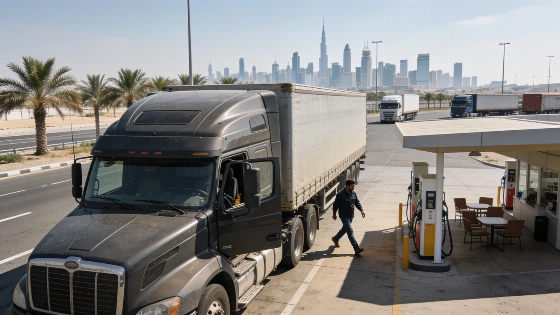
Truck drivers in Dubai are about to see big changes. Starting 1 October 2026, the Roads and Transport Authority (RTA) and Dubai Police will block heavy vehicles from using most of the city's main roads during peak hours. Emirates Road is the only major route that stays open for trucks. That's official, according to the Emirates News Agency (WAM) and top regional news outlets.
This isn't just a blanket ban. The plan is sharp and targeted. Dubai wants to clear its busiest roads, cut travel times, and make streets safer for everyone. The authorities are using traffic data to set rules for each road and neighborhood. Some areas get stricter limits than others. Khaleej Times reports that this approach matches Dubai's push to balance logistics with city life. It's part of the Dubai Economic Agenda D33 and fits the UAE Vision 2031.
How the truck ban will work
The new rules are not one-size-fits-all. On some roads-Al Qudra Street, Meydan Street, all marine bridges, and the Airport Tunnel-trucks are banned 24 hours a day. Other routes, like Sheikh Zayed Road, Beirut Street, and neighborhoods such as Al Mizhar, Muhaisnah, and Oud Al Muteena, will see a 16-hour ban from 6:00am to 10:00pm. WAM and Dubai Media Office have confirmed these details. On busy urban roads like Airport Road, Oman Street, and Damascus Street, trucks face three daily peak-hour bans: 6:30-8:30am, 1:00-3:00pm, and 5:30-8:00pm. The rules match the city's traffic patterns. The goal is simple. Keep goods moving, but don't choke the daily commute.
This is part of a bigger push for safer, smoother roads. The UAE keeps investing in infrastructure and updating regulations. RTA and Dubai Police say there will be exceptions for essential cases. These must go through the official RTA portal. That way, key supply chains keep running even during restricted hours.
Rest stops and compliance measures
New rules mean new needs. The RTA has built a network of truck rest stops. Fourteen out of sixteen planned stops are already open. They sit close to major roads and logistics hubs. Seven of these stops just got bigger-capacity is up 50%. Now, there are 1,007 truck parking spaces. That's from Gulf Today and official RTA statements. The RTA will add four more permanent stops with help from private partners. These sites give drivers a safe place to wait and cut down on random parking in neighborhoods and industrial zones.
Each rest stop has the basics: places to sleep, prayer rooms, restaurants, shops, and fuel stations. More than 150,000 trucks use these stops every month. That matters. Dubai sees about 400,000 truck trips every day. The RTA is rolling out a big awareness campaign. Drivers and logistics firms need to know the new rules, alternate routes, and where to park during restricted hours. The UAE is betting on smart mobility and greener cities. Recent Gulf News analysis backs this up.
Penalties and operational impact
Break the rules, pay the price. That's the message from authorities. Truck drivers and companies must plan ahead, stick to the new times, and avoid stopping where they shouldn't. If a truck needs to be on the road during restricted hours for essential work, the company must get a Road Occupancy Permit (ROWS) from the RTA website. No permit means fines. Digital monitoring and enforcement will back up the rules. Dubai is using smart city tech and strict oversight. The National and Reuters have covered this shift.
Dubai has taken tough steps on road safety before. Earlier reports show Dubai Police have also boosted training for school bus staff to protect kids and cut risks.
Dubai is making its priorities clear. Targeted truck bans, better rest stops, and strict enforcement are all part of the plan. The city wants roads that work for everyone. Safety and speed come first. For residents and businesses, this should mean faster, safer, and more reliable trips across Dubai's changing road network.