
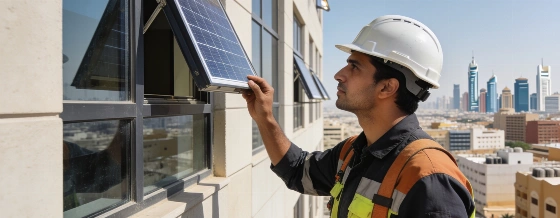
Dubai Municipality has introduced the Dubai Green Building Guidelines, a set of standards aimed at making the city's existing buildings more energy- and water-efficient. The guidelines are part of Dubai's broader push for sustainability under the Dubai Economic Agenda D33 and UAE Vision 2031, which both emphasize greener infrastructure and environmental responsibility. Recent coverage from the Emirates News Agency highlights how these efforts fit into the city's long-term plans.
Unlike earlier policies that focused on new construction, these guidelines are tailored for buildings already in use. Owners and operators now have a clear framework for retrofitting and upgrading their properties. The municipality has outlined technical standards and practical steps for making these changes. In 2026, Dubai Municipality partnered with BCA International to share expertise on green building and advanced construction, reinforcing the city's focus on energy efficiency and international best practices, according to official statements.
What the new guidelines mean for building owners
The Dubai Green Building Guidelines provide a roadmap for improving how existing buildings use resources. They cover energy and water use, waste reduction, and carbon emissions, with an eye on balancing environmental goals and economic realities for owners and investors. The standards are meant to be straightforward, so consultants, engineers, and property managers can apply them without confusion. Key benchmarks include targets to cut energy use by up to 30% and reduce potable water consumption by 15%. There are also specific requirements for building envelope insulation and window glazing, as detailed in industry briefings.
For building owners, the benefits are direct: lower utility bills, reduced maintenance and operating costs, and better performance from building systems. The guidelines also address indoor air quality and occupant comfort, aiming to improve both health and the usability of spaces. Dubai Municipality has stressed that retrofitting is a practical option for older buildings, even if some structures can't fully match new-build standards. Upgrades like modern HVAC systems, LED lighting, and water-saving fixtures are prioritized.
Environmental and market impact in Dubai
Dubai Municipality's guidelines are intended to strengthen both environmental outcomes and the city's property market. By raising standards for existing buildings, the city aims to make its real estate more competitive as efficiency and sustainability become standard expectations. These guidelines are now part of the Al Sa'fat and Dubai Building Code frameworks, so both new and existing projects follow the same regulatory direction. In 2026, Dubai Police announced a solar energy project across 28 sites, including both new and existing buildings, further showing the government's commitment to reducing emissions and modernizing infrastructure, as reported by WAM.
Engineer Maryam Al Muhairi, Executive Director of the Building Regulation and Licensing Agency at Dubai Municipality, said the guidelines support the construction sector with flexible, forward-looking solutions. She noted that the standards align with Dubai's broader sustainability goals, including the aim for net-zero energy buildings by 2050. According to Al Muhairi, the framework gives owners and operators the tools to cut emissions, lower costs, and improve building quality, all while supporting a better urban environment.
The guidelines are integrated with Dubai Municipality's existing sustainability standards, ensuring consistency across policies. For more on how Dubai coordinates public safety and community initiatives, a previous investigation offers insight into the city's cross-sector efforts.
How to access and use the guidelines
Consultants, engineers, and building owners can find the full Dubai Green Building Guidelines on the Dubai Municipality website (dm.gov.ae). The document includes step-by-step instructions, technical benchmarks, and practical advice for retrofitting and operational upgrades. The municipality's goal is to make the process straightforward, supporting Dubai's move toward a more efficient and resilient built environment. The guidelines also reflect the UAE's wider regulatory momentum, with the Central Bank and other federal bodies increasingly focusing on green finance and sustainable investment, as reported by The National and Bloomberg.
Sustainability is now a clear requirement for Dubai's property sector. With these guidelines in place, building owners have both the responsibility and the tools to make measurable improvements-raising standards for environmental performance, asset value, and quality of life across the city.