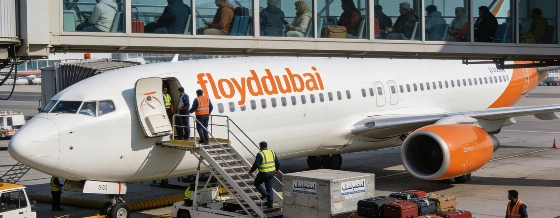
flydubai is moving fast to rebuild and expand its network, adding more seats on key routes as demand for travel to Dubai picks up again. While the region still faces operational challenges, the airline has already resumed service to over 125 destinations. This push supports the Dubai Economic Agenda D33, which aims to double Dubai's economy and strengthen its role as a global aviation and logistics hub, according to the Dubai Media Office.
Currently, flydubai is operating at more than 85% of its pre-disruption network-a level that seemed unlikely just a few months ago. This quick recovery reflects both the airline's flexible business model and the coordinated work across Dubai's aviation and tourism sectors. CEO Ghaith Al Ghaith credits this progress to "close coordination between all stakeholders in Dubai's aviation and tourism sectors, guided by the leadership's vision." Emirates News Agency (WAM) notes that this kind of collaboration is central to the UAE's post-pandemic recovery, with aviation seen as a key part of the national economy.
New routes and more flights to meet demand
In recent months, flydubai has launched or resumed flights to several destinations, including Aleppo, Benghazi, and Bangkok. The Bangkok route has grown quickly: it started with one daily flight and now runs three direct flights per day, showing strong passenger demand and the airline's ability to respond quickly. FlightStats data confirms that the Dubai-Bangkok (Don Mueang, DMK) route is running triple-daily flights as of mid-September 2026.
On 23 September, flydubai will add Pokhara as its second destination in Nepal after Kathmandu. This new route aims to serve both leisure and business travelers and further connect Dubai with the region. The first Pokhara-Dubai flight is scheduled to arrive in Pokhara at 18:15 and depart for Dubai at 19:15, using Airbus A319/A320 aircraft with 140 to 180 seats. This move supports the UAE's broader connectivity goals and fits with ongoing government investment in aviation infrastructure, as reported by Reuters.
Staying flexible under pressure
Despite ongoing regional difficulties, flydubai has managed to restore over 85% of its network-a level of operational resilience that some competitors have not matched. The airline has increased seat capacity on routes like Almaty, Bishkek, and Tashkent to meet higher demand during the summer. Chief Commercial Officer Hamad Obaidalla says that "positive demand for travel across our network, especially to seasonal summer destinations, has driven us to boost seat capacity on year-round routes." The National also reports that Emirates, Dubai's main carrier, is now operating at about 93% of its pre-pandemic capacity, showing the region's aviation sector is rebounding.
flydubai's growth is not limited to passenger flights. As reported earlier, the airline is also investing in dedicated cargo operations at Al Maktoum International Airport, supporting Dubai's logistics and connectivity plans. These steps follow regulatory guidelines from the Dubai Civil Aviation Authority and the UAE General Civil Aviation Authority, which continue to encourage innovation and growth in the sector.
What travelers can expect
With the summer travel season ending, flydubai is already seeing strong bookings for winter. The airline expects this momentum to continue as Dubai remains popular for both leisure and family visits. For travelers, this means more destinations, more frequent flights, and greater flexibility, whether flying for business, tourism, or personal reasons. The Central Bank of the UAE (CBUAE) has noted that strong aviation activity is a key driver of the country's non-oil GDP growth, highlighting the importance of flydubai's network expansion.
flydubai's rapid network rebuild is a clear move to capture market share while others hold back. By investing in new routes and increasing frequencies, even in a tough environment, the airline is showing confidence in Dubai's long-term travel prospects. For residents and visitors, Dubai's connectivity is growing again, and flydubai plans to keep it that way.