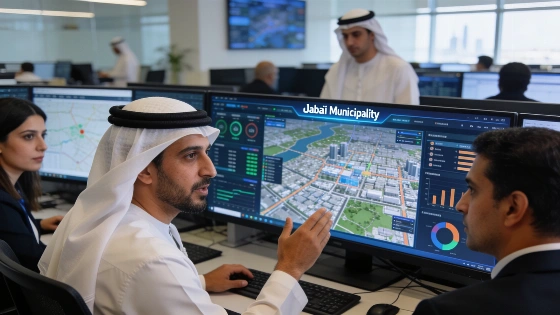
Dubai Municipality has switched on a new era for its public assets. IBM Maximo Application Suite 9.1 now runs at the heart of the city's asset management. More than 350,000 assets-everything from streetlights to major infrastructure-are now tracked and managed on one platform. This overhaul fits into the Dubai Economic Agenda D33 and the UAE Vision 2031.
Fragmented data and scattered systems have slowed city teams for years. That changed with Maximo. Now, technical, financial, operational, and geographic details all feed into a single source. Teams see the full picture. They can act faster. Maintenance, investment, and planning all run on real numbers, not guesswork. Dubai Municipality's new membership in the Global Digital Twin Consortium, as reported by Emirates247, brings in global expertise on digital twin and geospatial data for city planning and infrastructure.
Centralised data powers city services
The Maximo system links up with the city's ERP, CRM, GIS, and IoT platforms. Every asset is visible in real time. Data moves between departments without delay. The municipality has set up a clear framework for asset information. Each asset is classified, mapped, assigned an owner, and tagged with maintenance and financial details. No more confusion. Teams know what they own, where it is, and who is responsible.
Dubai Municipality has already mapped over 195,000 buildings in 3D. Its digital twin now connects with the city's NOC system, built with local utilities. The Emirates News Agency (WAM) notes that this digital twin helps with both planning and day-to-day management. It sets the stage for a single asset management platform.
Automation now drives the asset lifecycle. Maximo handles asset records, inventory, warehouse management, maintenance across five sectors, asset disposal, advertising, inspections, and investment planning. One set of rules. One workflow. No more patchwork systems.
Strategic impact and industry recognition
IBM has named Dubai Municipality a government leader for its use of Maximo Application Suite 9.1 in the UAE. The platform's dashboards show live asset health, maintenance status, and efficiency. Technical, financial, and operational data now connect. The city can track lifecycle costs, set investment priorities, and plan budgets with sharp accuracy.
This is about more than software. It's a shift in how Dubai treats its assets. Nasser Hamad Bu Shehab, Executive Director of the Planning and Governance Sector, says Maximo marks a new way of seeing municipal assets-as strategic resources. Unified data and workflows protect long-term value. The city aims to keep services reliable and high quality for everyone.
Other cities are watching. IBM's regional general manager, Shukri Eid, points to Dubai's model: trusted data and integrated management give cities an edge in resilience and reliability. Dubai's push for new public service models is clear. The city has also launched endowment malls to fund community services.
Next steps: proactive asset management
Maximo sets the base for Dubai Municipality to move to proactive, condition-based asset management. The groundwork is done. Next, advanced analytics, IoT, and AI could help spot problems before they happen and boost asset performance across the city. The digital twin and geospatial projects, as covered by Al Ain, are expected to drive Dubai's smart city plans and support both asset management and wider urban innovation.
Dubai is betting on unified, data-driven asset management. The city is building strong digital infrastructure and open processes. The aim is clear: get the most from public assets, keep services strong, and set a new standard for city management in the region. This is more than a tech upgrade. It's a strategic shift that will shape Dubai's public services for years, in line with the emirate's rules and economic goals, as highlighted by the Dubai Media Office and business outlets like Bloomberg and The National.