At the Bloomberg New Economy Forum in New Delhi, Yuvraj Narayan said companies are paying more to keep goods moving as trading partners lose trust. The era of fewer trade barriers and freely flowing goods has ended, he said. Businesses are now lining up alternative routes and backup suppliers to keep operations running.
Bloomberg reported that he offered a hypothetical comparison: a company that once invested $1 billion in a single supply chain might now need close to twice that amount to build backup options. That figure reflects the potential cost of duplicating suppliers and routes, along with logistics capacity. It was not an announcement of a DP World investment. His remarks were reported by Bloomberg.
Governments are changing the rules around supply chains, too. UN Trade and Development, or UNCTAD, has identified tariffs and export controls among measures increasingly used to protect strategic industries. The agency also points to investment screening and supply-chain requirements. Those measures affect sectors such as semiconductors and artificial-intelligence infrastructure. Clean energy is another focus. UNCTAD's overview of trade policy details how these steps can affect access to technology and markets.
Trade has kept growing despite the barriers. UNCTAD said its value reached a record $35 trillion in 2025. Yet access to strategic sectors has tightened, and the effects of new technology and policy barriers vary, particularly for developing economies. The United Nations report described the hurdles facing developing countries seeking a larger role in higher-value parts of the global economy.
Shipping disruptions show what those extra costs can look like.
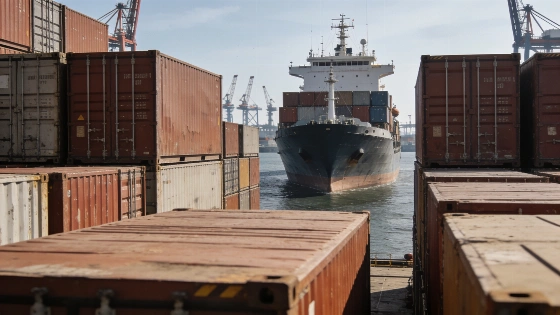
UNCTAD has described how disruptions in the Red Sea and Panama Canal pushed carriers to reroute vessels, adding distance and complexity to logistics networks. For a 20,000 to 24,000-TEU vessel on a Far East-Europe journey diverted around Africa instead of passing through the Suez Canal, an estimate cited in UNCTAD coverage put additional EU Emissions Trading System costs at about $400,000. Longer journeys can drive up fuel and crew costs. Port expenses and insurance can rise as well. UNCTAD separately estimated that sustained higher container rates tied to disruptions in the Red Sea and Panama Canal could add 0.6% to global consumer prices by the end of 2025.
Dubai has also drawn more cross-border business. A separate report on Chinese firms at DMCC described an increase in Chinese companies operating in the free zone. That growth is separate from Narayan's comments on the cost of supply-chain resilience.
Trust came up during the forum session "The Race for Self-Sufficiency". Narayan joined ministers from Singapore and India. A Canadian minister also took part. UNCTAD has described recent supply-chain shifts as increasing fragmentation and transport distances. It also says the number of counterparties involved has grown. Its recommendations call for investment in ports and infrastructure. They also cover technology and skilled personnel, stronger international cooperation, and more efficient border and port procedures.