
At the Bloomberg New Economy Forum in New Delhi on 14 October 2026, DP World chief executive Yuvraj Narayan put a price on weakening trust between trading partners. Companies that once invested $1 billion in supply chains may now need to spend close to $2 billion to keep goods moving. That means paying for backup suppliers and alternate routes. It can also require warehouse space, followed by added transport capacity.
Narayan called this the cost of redundancy. He said the era of lower trade barriers and freely moving goods had ended.
The shift shows up in DP World's Global Trade Observatory survey. Conducted in August 2026, it covered 103 senior supply chain executives across 14 markets and nine sectors. In results published in October, 84% said resilience and access to alternatives had overtaken cost reduction as the leading priorities in supply chain strategy, according to the survey findings.
For Dubai exporters, logistics planning has a local angle too. A workshop for 50 members of the Export Support Programme covered shipping preparation and preferential DHL rates, according to a Dubai exporters report.
In the survey, 71% of executives said they planned to diversify their supplier base over the following 12 months. Another 86% viewed access to alternative trade routes and transport modes as a competitive advantage. Narayan said companies were facing higher costs as confidence between trading partners weakened. Moneyweb reported his remarks.
Building backup networks can mean spending more on warehouses and inventory. Companies may also need to pay for transport and logistics infrastructure. Those measures can reduce reliance on a single supplier or route, but higher operating costs may feed through to prices if businesses pass some of the expense on to consumers.
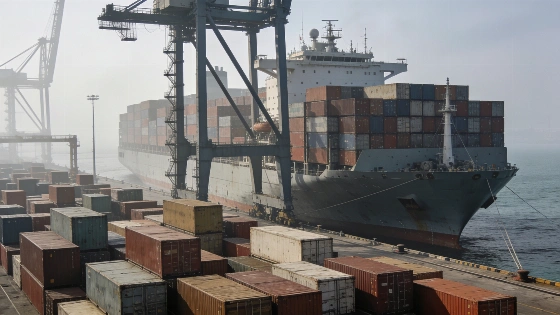
The stakes reach beyond individual companies. UN Trade and Development reports that maritime transport volumes hit 12,720 million tonnes in 2024. Maritime transport carries more than 80% of global goods trade by volume. DP World estimates that containerised goods moving through maritime trade networks are worth about $14 trillion.
DP World says geopolitical tensions and climate pressures are reshaping cargo flows. Trade policies are changing, while manufacturing centres are shifting. Disruptions in key shipping corridors, including the Red Sea and Bab el-Mandeb, have forced vessels to change routes and lengthened voyages. Regional ports and coastal transport can offer extra options when major shipping lines face operational difficulties or restrictions.
Companies are weighing the cost of backup suppliers and larger inventories against the risk of interruptions to production and distribution. Alternative routes are part of that calculation. Disruptions in the Red Sea and Bab el-Mandeb have lengthened voyages.