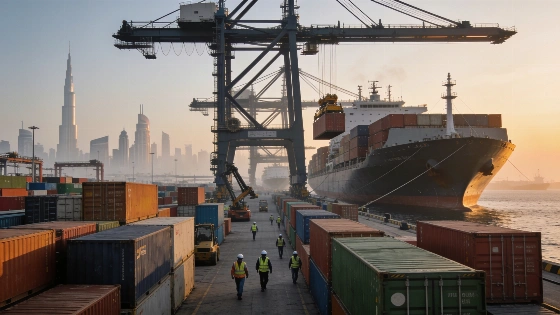
Container ships no longer follow the same old paths. DP World's latest white paper, released for World Maritime Day 2026, spells it out. The world's main shipping lanes are under strain. Geopolitical fights, climate shocks, and new trade rules are breaking up the old order. Dubai's leaders see the risk. The Dubai Economic Agenda D33 puts logistics innovation and supply chain strength at the heart of the city's future as a trade hub.
Sea freight moves more than 80% of the world's container goods. That's about $14 trillion. Dubai's logistics sector stands right in the middle. DP World's research says companies can't just stick to the old routes. They need to move fast. The future belongs to those who can switch between ports, rail, road, and inland waterways. The Emirates News Agency (WAM) has pointed out that the UAE's ports are among the world's most efficient and high-tech. That's not by accident.
Dubai's trade corridors take center stage
Old shipping lines are under pressure. DP World says businesses need more ways to move goods. This isn't just talk. The company's white paper, "Sailing Towards the Future of Maritime Trade," shows how feeder, coastal, and short-sea shipping now connect new factories to regional ports and the world's main arteries. The UAE Ministry of Energy and Infrastructure has backed these alternative services in recent policy briefings. The goal is clear. The UAE wants to be a global logistics powerhouse.
When companies combine these maritime links with rail and road, they get more entry points and backup routes. That matters when the main corridors get blocked. The numbers back it up. DP World's Global Trade Observatory 2026 found that 94% of over 3,500 supply chain and logistics leaders expect trade volumes in 2026 to match or beat 2025, even with all the turmoil. Gulf Business reports the same optimism. The UAE's trade sector keeps moving, even when the world stumbles.
Ganesh Raj, DP World's Global CEO of Marine Services, doesn't mince words. "With over 80% of global trade by volume moving by sea, resilience and adaptability are now business essentials." DP World's plan is simple. Build "connected trade corridors." That means linking ports, marine services, and inland logistics so cargo can be rerouted fast. Dubai Free Zones Council and the Central Bank of the UAE (CBUAE) have both rolled out new rules to make cross-border trade smoother and boost the UAE's logistics edge.
Trade flows are shifting, not shrinking
DP World's analysis is blunt. Global trade isn't shrinking. It's changing shape. Tariffs and new manufacturing hubs are shifting cargo flows. Production is spreading out. India, Southeast Asia, Latin America, the Middle East, and Africa are all rising as manufacturing centers. That's changing shipping patterns. The National reports that the UAE's trade with emerging markets is booming. Non-oil trade between the UAE and India alone topped AED 200 billion in 2025. South-south trade corridors are on the rise.
The growth is huge. Exports between developing economies jumped from about $500 billion in 1995 to $8.8 trillion in 2025. That's nearly twenty times more. Now, over half of developing countries' exports go to other emerging markets. This boom forces supply chains to get flexible. Companies want more gateways and transport options to keep up.
Dubai's maritime network is already changing. DP World's marine services now link over 200 ports across Northern Europe, the Mediterranean, the Middle East, Africa, Asia, and the Americas. The fleet has more than 500 vessels. This isn't just about size. It's about building a network that can take a hit and keep moving cargo. The Dubai Media Office has pointed to new investments in smart port tech and digital customs. These upgrades help Dubai react fast when global supply chains get hit.
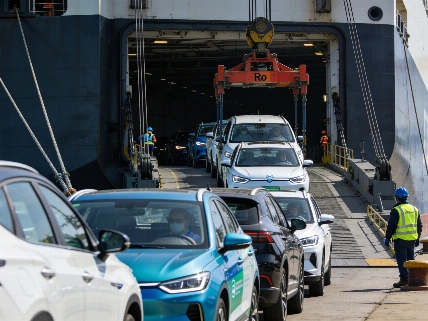
Big ships are now docking at regional ports. Recent arrivals show how Dubai and its neighbors are carving out new roles in global trade.
What's next for Dubai's logistics
The old days of predictable shipping are gone. DP World's white paper is clear. The next era of maritime trade will depend on strong, flexible trade corridors. The old model-relying on a few main routes-won't cut it. Dubai faces a choice. The city's logistics sector must invest in smarter, tougher networks that can handle constant change. Move first, and you stay at the center of global supply chains. Fall behind, and you get left out. The UAE government is backing this shift. Recent WAM reports confirm new spending on infrastructure and updated rules. That's how Dubai plans to keep its lead in global maritime trade.