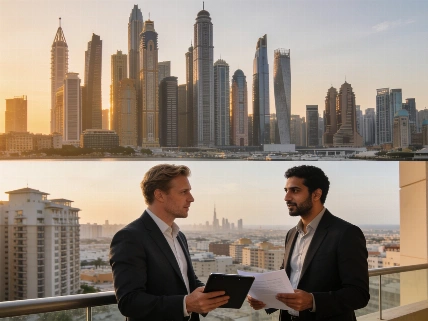
Chinese companies are changing how they go global. Dubai is now their main base for building real international businesses, not just a place to pass through. The old model-ship products abroad and hope for sales-is fading. Now, it takes digital infrastructure, local partners, and a real effort to fit new markets.
This shift was clear at the 5th Dubai Business Forum - China, set for 14 October 2026 in Shenzhen. Dubai Chambers organized the event to help Chinese firms grow in Dubai. The room was packed with leaders from cloud computing, mobility, logistics, digital entertainment, and investment. Names like BYD, Baidu, Tencent Cloud, Huawei Cloud, iMile, YTO International, Yalla, Aridge, CICC, and China Merchants Capital all showed up. Their point was simple. Dubai is more than a gateway. It is a launchpad for scaling up across the Middle East and beyond. The Emirates News Agency (WAM) covered the event's message.
Building the digital backbone
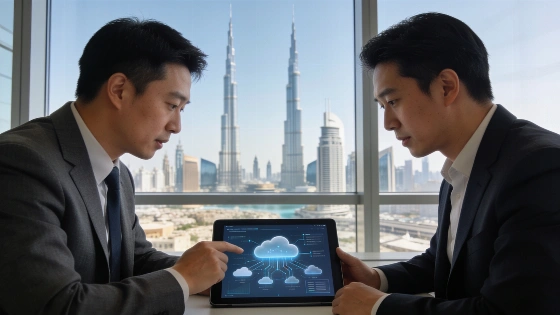
Huawei Cloud faces a tough job. It is not just about linking Chinese and local firms. The real task is to help UAE industries use artificial intelligence. Alan Qi, President of Huawei Cloud for the Middle East and Central Asia, explained how the company helps with technical integration, knowledge sharing, and cross-border teamwork. At the forum, Qi plans to talk about the cloud infrastructure needed for AI, the economic chances this brings, and how Dubai draws in talent and new tech companies. The agenda also includes policy and industry updates from Dubai Chamber, the Dubai Department of Economic Development, and the Dubai Future Foundation. These groups are pushing for a strong digital economy under the Dubai Economic Agenda D33.
Tencent Cloud has picked Dubai as its main base for regional cloud work. Rachel Shi, General Manager for the Middle East and North Africa, will share what the company has learned in Dubai and how to speed up AI adoption. Her focus is on how Dubai's business climate helps launch new tech faster. This fits with the UAE's digital transformation plan, backed by rules from the Dubai International Financial Centre (DIFC) and the Virtual Assets Regulatory Authority (VARA).
Alibaba Cloud is also moving fast. The company just announced it will grow its data-center network in the UAE, plus new cloud regions in Turkey, Finland, and the Netherlands. Reuters reporting shows Alibaba Cloud now runs 107 availability zones in 31 regions. The goal is to put computing power closer to customers and boost local cloud and AI services. CTO Feifei Li said this growth is tied to Alibaba's AI plans. The company wants to top 20 gigawatts of global data-center capacity by 2032 as AI demand climbs. That is a huge target.
Adapting products for real users
Tech alone does not win new markets. In digital entertainment, companies face a basic question. Will users in Dubai want the same product as users in China? Jason Hua, Chief Strategy Officer at Yalla Group, said the company shapes its services and games to fit local tastes. They use market data to guide what they build. Dubai's mix of markets and cultures makes it a good place to test ideas. The forum gives companies a space to swap strategies for the next growth phase. The National has reported that this kind of localization is now key for tech firms trying to succeed in the Gulf.
The talks at the forum went deeper than just how to enter a market. They covered how to spend capital, match tech and products to what people want, build a brand, handle logistics, run local operations, and make partnerships that turn a foreign presence into a real business. Success depends on getting these steps right. The Central Bank of the UAE (CBUAE) has tracked a jump in foreign direct investment into the UAE's tech sector in recent years. That shows growing trust in the country's innovation scene.
This approach matches a bigger trend. Global brands are digging in and making Dubai part of their core business, not just a side project. Earlier reports on luxury property deals show the same pattern. Dubai is not just a theory. Ambitious companies are testing and refining their strategies here.
Dubai's rise as a hub for Chinese business did not happen by chance. Companies made clear choices. They saw the region's complexity and invested in infrastructure, partnerships, and local know-how. The lesson is clear. Real growth comes from adapting, not assuming. Companies that treat Dubai as a true base-not just a sales office-are leading the next wave of global business. The pace is set here.