
Canadian University Dubai has launched a groundbreaking live event featuring humanoid robots in collaboration with Besomi Electronics. The initiative marks a new phase in hands-on AI and robotics education for students and signals a deeper industry-academic partnership in Dubai.
Canadian University Dubai has thrown open the doors to a new era of robotics education, staging a live humanoid robot event at its City Walk campus that signals a decisive shift in how students engage with emerging technology. The collaboration with Besomi Electronics is not just a spectacle-it is a strategic move to embed real-world AI and robotics into the heart of Dubai's academic landscape.
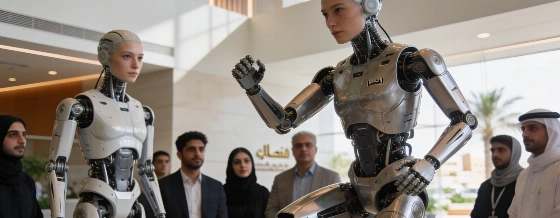
Forget passive lectures and theoretical modules. Students, faculty, and industry guests witnessed the Besomi Rangers-humanoid robots engineered for direct human interaction-demonstrate their capabilities in a series of live performances. The centrepiece was a three-round exhibition match between robots, flanked by robotic dance routines and spontaneous audience engagement. The event was designed to break down barriers between classroom learning and the practical demands of the technology sector.
Industry partnership redefines robotics education
The event was more than a one-off show. It marked the launch of a strategic partnership between Canadian University Dubai and Besomi Electronics, aimed at giving students and faculty direct access to the latest robotics and AI technologies. The agreement will see the opening of a dedicated Besomi robotics and AI laboratory on campus, providing a permanent base for hands-on experimentation and industry collaboration.
Bat Saeed Al Kindi, Chairman of the Board of Trustees at Canadian University Dubai, made the stakes clear: "The UAE's vision for a diversified, technology-driven economy demands strong links between education, industry, and innovation. This partnership gives our students practical experience in robotics and AI, opening up opportunities for applied learning and future-ready skills."
Dr Karim Chelli, President and Vice Chairman of the Board of Trustees, reinforced the university's commitment to bridging the gap between academic theory and industry needs. "By hosting the first live humanoid robot showcase at a UAE university, we are giving students a front-row seat to the technologies shaping the future of AI, robotics, and automation," he said.
Robots designed for human interaction
The Besomi Rangers are not generic machines-they are built to interact, move, and perform in ways that make robotics accessible and engaging for non-specialists. Their live demonstration included not only technical feats but also direct audience participation, highlighting the potential for robots to operate in real-world environments beyond the lab.
Besomi Electronics CEO Mohamed Besomi described the next frontier as "physical AI"-giving intelligent systems the ability to move, interact, and work in the material world. "Humanoid robots make this transformation visible and accessible," he said. "We are proud to bring this experience to the UAE, a country that continues to set the global standard for purposeful innovation."
The event also featured a panel discussion between Dr Sharif Moussa, Dean of the Faculty of Engineering, and Mohamed Besomi, exploring the future of human-robot interaction and the skills students will need to thrive in a rapidly evolving sector.
What happens next for students and industry
The new Besomi robotics and AI lab at Canadian University Dubai is set to open soon, giving students unprecedented access to advanced technologies and direct industry mentorship. The partnership is expected to drive applied research, foster critical thinking, and prepare graduates to contribute to the UAE's priorities in advanced technology and the knowledge economy.
Dubai's education sector has often talked about innovation, but this collaboration delivers concrete infrastructure and industry access. By moving robotics out of the abstract and into the hands of students, Canadian University Dubai and Besomi Electronics are setting a new benchmark for what practical technology education should look like in the city. The real test will be whether other institutions follow suit-or whether this remains a rare example of academia and industry working in true partnership to shape Dubai's technological future.