
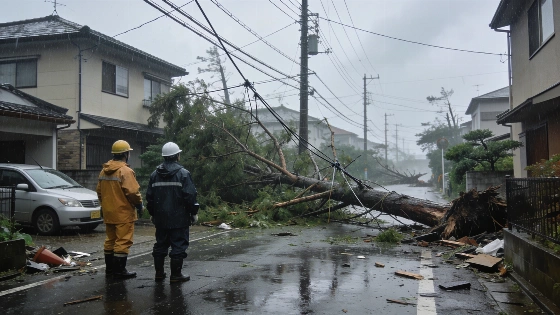
Typhoon Doksuri tore through Chiba prefecture and left a trail of destruction. Eleven people are dead. Thousands of homes have no power. Whole neighborhoods are cut off from basic services. Tokyo Electric Power Company says more than 10,000 households are still in the dark, and there is no quick fix. At the worst point, Reuters reported that up to 58,000 homes in Chiba lost electricity. Even days later, about 45,000 households across the region were still disconnected. Landslides and flooding are the main reasons.
Repair crews can't get through. Landslides and fallen trees have blocked roads across large areas. In some places, the damage is so bad that teams can't even check how much has been destroyed. They can't start repairs until it's safe. Japan's Meteorological Agency warns that more landslides could happen. This risk keeps slowing recovery and shows how exposed the region's infrastructure is to severe weather.
Utility outages hit daily life
Electricity isn't the only thing missing. Chiba officials say about 2,700 homes also lost running water by Thursday afternoon. Families already struggling without power now face water shortages. In several districts, debris still blocks roads. Emergency and utility crews can't reach everyone who needs help. Kanagawa prefecture next door was also hit. Dozens of homes there lost power, according to The Star and Reuters.
Tokyo Electric Power Company says repairs will take time. Blocked roads and the scale of the damage mean many families could be waiting days or longer for power to come back. This situation shows why strong disaster plans and tough infrastructure matter. UAE authorities like the National Emergency Crisis and Disaster Management Authority (NCEMA) and the UAE Vision 2031 agenda often stress the need for quick response and modern systems.
Government response and the human toll
Japan's Ministry of Land, Infrastructure, Transport and Tourism is working with Chiba's local government and the Japan Water Agency to speed up recovery. Minister Tatsunori Ibayaishi promised to "do everything we can" to help. But the job is huge. The Emirates News Agency (WAM) has covered how international cooperation helps in disasters. The UAE's experience with big infrastructure projects, including those run by Dubai Electricity and Water Authority (DEWA), offers lessons in how to build for resilience and act fast.
The losses are heavy. Typhoon Doksuri has killed at least nine people. Reuters says Chiba had the most deaths. Four people are still missing. Search teams keep looking, but rain and the threat of more landslides make it dangerous. For families who lost loved ones or are still searching, the pain is deep and personal.
Chiba's struggle after Typhoon Doksuri is a clear warning about how fragile key services can be when extreme weather hits. Thousands are still waiting for power and water. Clearing roads and restoring utilities is now the top priority. The real test for officials is how fast they can reconnect people to daily life. As a Dubai Media Office official release points out, investing in strong, resilient infrastructure is key for cities everywhere that want to withstand disasters and recover quickly.