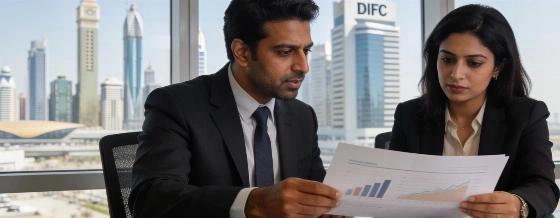
Dubai has quickly become the top choice for Indian wealth managers and wealthy families who want to move beyond India's borders. The city's close ties to India, strong financial setup, and easy global connections have made it a natural base for cross-border investment. The Emirates News Agency (WAM) and business media report that Dubai International Financial Centre (DIFC) passed 10,000 active registered companies by mid-2026. This shows how much Dubai's reputation as a global financial hub has grown.
Mohammed Al Bastaki, Group Head of Private Banking and Wealth Management at Emirates NBD, says Indian clients have become "more global" in their outlook. They are no longer satisfied with just regional trade or business banking. Now, they want advanced investment advice, help with succession planning, and ways to manage wealth across borders. The National points to a 36% jump in family offices working out of DIFC year-on-year, with 1,408 family office-related structures set up by June 2026.
Indian family offices look beyond borders
Indian entrepreneurs, founders, top executives, and family business owners are spreading their interests across different countries. Many still keep their main businesses and investments in India. But Dubai is now their launchpad for reaching international markets. This lets them build portfolios that mix Indian assets with global investments and custodial setups. The goal is to lower risk from having everything in one place and to protect against swings in markets and currencies. Sector reports say more than 6,500 Indian families with over $10 million in assets are part of this trend. They use Dubai's financial system to find alternative deals and diversify globally.
Al Bastaki explains that this isn't about moving all their money to the UAE. Instead, Dubai acts as a bridge to global opportunities. Younger wealth creators and heirs are getting more involved in investment choices. They are especially interested in global markets and alternative assets. A new regulatory regime for family offices in DIFC, launched at the end of 2023, has sped up this shift. It has drawn ultra-wealthy families from India, Saudi Arabia, Egypt, and Central Asia, according to industry reports and statements from Dubai Media Office.
Advanced wealth management services in Dubai
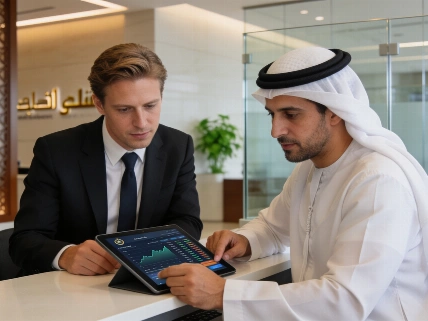
Emirates NBD's private banking arm offers a range of services for high-net-worth clients with cross-border needs. These include investment advice, portfolio management, estate and real estate planning, and international banking through centers in London, Singapore, Saudi Arabia, and India. The bank says demand is rising for equities, especially in technology and long-term themes. Fixed income is still a key part of portfolios because of global yield levels. WAM reports that nearly half of Middle East family office capital goes to North America, 20% to Europe, and less than 1.5% to India. This shows how global the region's wealth flows have become.
There is also a clear move toward private markets. Interest in private equity, private credit, venture capital, and other alternative assets is growing. Family office structures, governance, and succession planning are now front and center as families focus on preserving wealth and passing it on efficiently. DIFC has seen a 35% yearly rise in wealth and asset management activity. This cements Dubai's role as a magnet for global capital and a center for new ideas in financial services.
Currency risk and the global role of Dubai
With the Indian rupee facing pressure, Indian investors are drawing on their experience with currency swings. Many keep some of their money in hard currencies. For them, currency diversification is a way to manage risk, not just a short-term tactic. Dubai's financial system supports this, offering multi-currency options and access to global markets. The Central Bank of the UAE (CBUAE) keeps rolling out policies to boost liquidity and make cross-border transactions smoother. This makes Dubai even stronger as a global wealth hub.
Dubai's wealth management sector is also changing through new partnerships. In December 2025, DIFC announced a partnership with Emirates NBD to build frameworks for ultra-wealthy individuals and family businesses. This fits with Dubai's goal to be a world leader in wealth management and succession planning, as set out in the Dubai Economic Agenda D33 and backed by ongoing regulatory changes from the Dubai Financial Services Authority (DFSA).
As Indian wealth managers and family offices look outward, Dubai's role as a cross-border investment hub keeps growing. The city offers advanced advice, global custody, and solutions that work across different countries. This makes it a key player in the world of international wealth. For those watching how technology, finance, and cross-border investment come together, Dubai's path matches the changes reported earlier in its trade and tech partnerships. The facts are clear. Dubai is no longer just a stopover for Indian capital. It is turning into the engine room for global wealth strategies. For investors and family offices, the message is simple: Dubai is now a must-have part of any plan to diversify and protect wealth.