
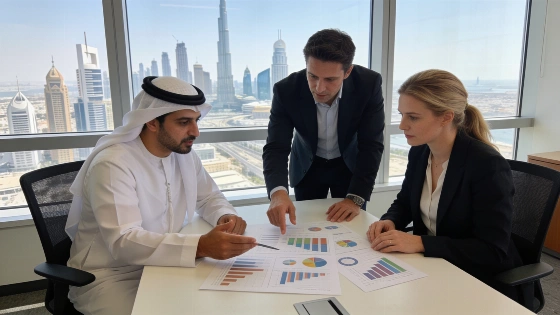
September brought a sharp jump in Dubai's business activity. The S&P Global Purchasing Managers' Index (PMI) climbed to 54.5, the highest since February, according to Reuters. This was not a small move. Output shot up. New orders poured in at a pace not seen since early 2024. The Emirates News Agency (WAM) pointed to government reforms and the Dubai Economic Agenda D33 as key drivers. These steps have kept Dubai in the global business spotlight.
Non-oil companies in Dubai moved fast. Production grew at its quickest rate since January. Firms hired more people and bought more supplies to keep up with demand. Export orders jumped. It was the strongest export growth in two years. Dubai's pull as a trade hub is clear. S&P Global's survey covered about 1,000 non-oil private firms across the UAE. The results show that policy changes and new infrastructure are working.
Rising demand and pricing power
Companies in Dubai and across the UAE found themselves in a rare spot. They could raise prices. Demand was strong enough to let them do it. Selling prices went up at the fastest rate in over 15 years. Input costs were higher, so firms passed those costs on. Reuters said this was the steepest price hike since May 2011. Even so, buyers kept coming. Business activity kept rising. The Central Bank of the UAE (CBUAE) has said the non-oil sector is resilient. It keeps drawing foreign investment and adding jobs.
Private sector hiring in Dubai ticked up. August's dip was over. Still, the pile of unfinished work kept growing. Demand was that strong. Companies bought more concrete, steel, and electrical supplies. Inventory levels rose at the fastest pace since November 2023. Suppliers kept up. Logistics ran smoother. Material shortages eased. Delivery times got shorter for the fourth month in a row, as Khaleej Times business coverage confirmed. That's a big shift.
UAE-wide momentum and sector outlook
Dubai was not alone. The UAE's main PMI stayed at 55.3 in September. That matched August's 20-month high. Non-oil private firms across the country saw their fastest output growth since February. Customer demand stayed strong. New business kept coming in. The pace of new orders slowed a bit from August's peak, but foreign demand kept rising for the third month in a row. It hit the highest level since November 2024. MUFG Research reported Dubai's output index at 61.0, the best since December 2025. Regulatory changes from the Dubai Financial Services Authority (DFSA) and economic diversification played a part.
Even with strong orders, companies were careful about hiring. Job growth was modest. Demand kept backlogs high, but the build-up slowed compared to August. The National reported this fits a wider Gulf trend. Private sector growth is being balanced with gains in productivity and digital upgrades.
Business confidence and regional context
Dubai's latest PMI numbers show its strength as a business center. Companies are chasing both local and global deals. Foreign orders are rising fast. The city keeps working to deepen trade and investment ties, as seen in recent initiatives to build new partnerships abroad.
Costs are up. So is demand. Companies have managed to raise prices without losing buyers. That's rare. Supplier performance and inventory management have improved. Dubai's non-oil sector is running at full speed. The city looks set to keep growing, as long as firms stay nimble and keep riding the wave of strong demand and global connections.